


Activated Carbon: A Superior Adsorbent Solution
Activated carbon is a top choice in purification and filtration. It’s used in many fields, from water treatment to air cleaning. So, what makes activated carbon so special? And how does it outperform other adsorbents?
Activated carbon can pick out and remove unwanted stuff from different materials. It leaves the good stuff behind. This is thanks to its amazing ability to adsorb many kinds of pollutants and heavy metals. Its huge surface area and detailed pores make it a key player in cleaning technologies.
Click to use Silvari group personal shopper services
Key Takeaways
- Activated carbon is a highly effective adsorbent material used in various industries for purification and filtration purposes.
- It has a unique porous structure and vast surface area that allows it to selectively remove a wide range of contaminants and impurities.
- Activated carbon can outperform other adsorbents in terms of efficiency and versatility, making it a go-to solution for many industries.
- Understanding the science behind activated carbon’s properties and the activation process is crucial to unlocking its full potential.
- Activated carbon is not the same as charcoal, but it is an example of a highly engineered adsorbent material.
So, what makes activated carbon stand out? And how can it help solve big purification problems? Let’s dive into the science, uses, and future of this incredible material.
Understanding the Science Behind Activated Carbon
Activated carbon is a versatile, highly porous material used in many fields. It’s key in water purification and environmental cleanup. To grasp its power, we must understand its science and how it’s made.
Click to buy citric acid from Silvari group
Chemical Structure and Properties
Activated carbon is mostly carbon with a unique, porous structure. This structure offers a huge surface area, sometimes over 3,000 square meters per gram. The carbon atoms are arranged randomly, making it great at removing contaminants and porous materials.
Surface Area and Porosity
Its large surface area and complex pores make activated carbon a top-notch adsorbent. The pores vary in size, from big to small. This allows for effective removal of contaminants and environmental remediation in many areas.
Activation Process Explained
The activation process turns raw carbon into the efficient activated carbon we use today. It involves heating the carbon and treating it with chemicals. This increases its surface area and creates its unique pore structure. The end result is a material with unmatched adsorptive abilities, ideal for environmental remediation and removal of contaminants.
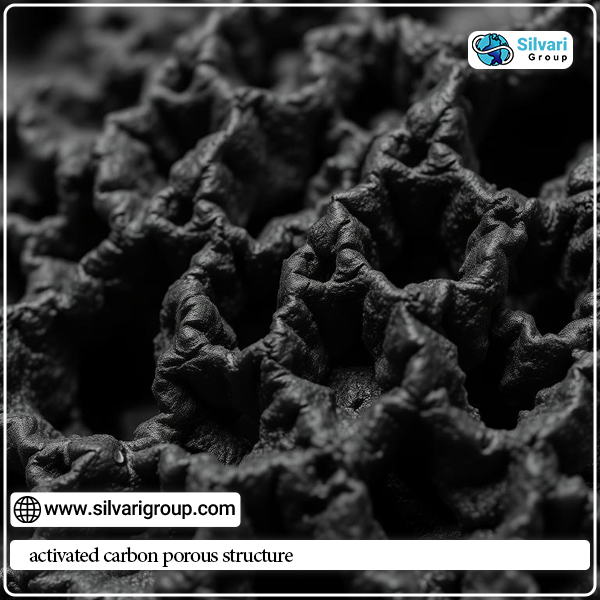
“Activated carbon is a remarkable material that has the ability to adsorb a wide range of contaminants, making it a crucial player in environmental remediation and water purification efforts.”
Click to buy frozen a grade beluga fish from Silvarigroup
Types of Activated Carbon Materials
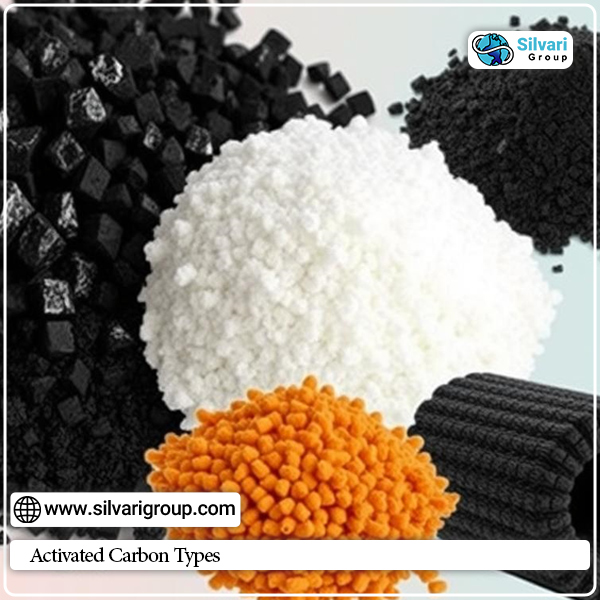
Activated carbon is a versatile adsorbent used in many industries. It comes in three main types: powder activated carbon (PAC), granular activated carbon (GAC), and extruded activated carbon (EAC). Each type has its own benefits and uses, making it important to know their differences.
Powder Activated Carbon (PAC)
Powder activated carbon, or PAC, is very fine. It’s used in water treatment, air filtration, and more. Its high surface area and adsorption power make it great for removing contaminants.
Granular Activated Carbon (GAC)
Granular activated carbon, or GAC, is a favorite for carbon filters. Its larger size and strong structure are perfect for fixed-bed systems. GAC is great at adsorption and can be reused many times.
Extruded Activated Carbon (EAC)
Extruded activated carbon, or EAC, is shaped into pellets or briquettes. Its unique shape gives it strength, making it ideal for high-pressure and gas adsorption. EAC is often used in air and gas purification.
Choosing the right activated carbon depends on the application’s needs. Factors like the contaminants, desired performance, and system design are important. Knowing about these materials helps industries improve their purification and filtration methods.
Industrial Applications and Uses
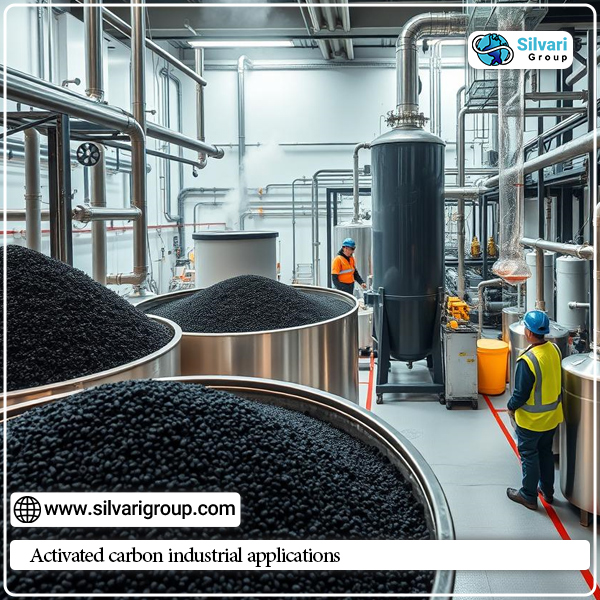
Activated carbon is a versatile material used in many industries. It’s great for water purification, air filtration, and cleaning up the environment. This is because it can adsorb and remove many contaminants.
In water treatment, activated carbon removes organic compounds and tastes. It also gets rid of disinfection byproducts and some heavy metals. This makes the water clean and safe.
It’s not just for water. Activated carbon is also used in the food and beverage industry. It purifies sugar, wine, and other products. In the pharmaceutical world, it helps remove unwanted compounds from drugs and medications.
Activated carbon is also key in air filtration. It takes out VOCs, odors, and other airborne pollutants. This makes it a must-have in HVAC systems, air purifiers, and protective gear.
Moreover, it’s vital in environmental remediation. Activated carbon treats soil and groundwater polluted with harmful substances. Its adsorption properties make it a top choice for cleaning up these problems.
| Industrial Application | Contaminants Removed |
|---|---|
| Water Purification | Organic compounds, taste and odor compounds, disinfection byproducts, heavy metals |
| Air Filtration | Volatile organic compounds (VOCs), odors, airborne contaminants |
| Environmental Remediation | Organic pollutants, heavy metals, hazardous substances |
| Food and Beverage Processing | Unwanted compounds in sugar, wine, and other products |
| Pharmaceutical Production | Unwanted compounds in drug and medication manufacturing |
Activated carbon is crucial in many industries. It’s vital for water purification, air filtration, and environmental cleanup. Its versatility and effectiveness make it indispensable.
Water Purification Systems and Processes
Activated carbon is key in many water purification systems. It helps remove contaminants from water. This material is used in many places, from big water treatment plants to homes.
Municipal Water Treatment
In big water treatment plants, activated carbon removes many impurities. It gets rid of organic compounds, chlorine, and things that make water taste bad. Its big surface area and holes help it grab onto these bad stuff, making the water better.
Industrial Wastewater Management
Activated carbon is also important for cleaning up industrial wastewater. Companies use it to get rid of heavy metals, dyes, and other pollutants. This way, they can follow environmental rules and safely release treated water.
Residential Water Filtration
At home, activated carbon water filters are a favorite for better drinking water. They take out chlorine, lead, and other organic stuff. This makes water taste good and clean, right from your tap. Using carbon filters at home is easy and cheap.
| Application | Contaminants Removed | Activated Carbon Type |
|---|---|---|
| Municipal Water Treatment | Organic compounds, chlorine, taste and odor-causing substances | Granular Activated Carbon (GAC) |
| Industrial Wastewater Management | Heavy metals, dyes, industrial pollutants | Powdered Activated Carbon (PAC) |
| Residential Water Filtration | Chlorine, lead, organic contaminants | Carbon Block Filters |
Activated carbon is very useful in keeping water clean and safe. It’s used in many places, from big water treatment plants to homes.
Air Filtration and Gas Phase Applications
Activated carbon is key in air filtration and gas phase uses. It’s great at removing contaminants. It’s used in many places, like industrial emissions control and improving indoor air quality.
Activated carbon is amazing at adsorption. Its special structure and big surface area help it catch and remove pollutants. This includes VOCs, odors, and harmful substances from the air.
Industrial Emissions Control
In industries, activated carbon helps control emissions. It meets environmental rules by trapping pollutants. This includes dioxins, mercury, and heavy metals from industrial exhausts.
Indoor Air Quality Improvement
Activated carbon also boosts indoor air quality. It’s used in air filters in HVAC systems. This removes allergens, odors, and VOCs, making homes healthier and more comfortable.
Odor Removal
Activated carbon is great at getting rid of bad smells. It works in places like kitchens, pet grooming salons, and waste facilities. It makes these areas smell fresher and nicer.
| Application | Benefit |
|---|---|
| Industrial Emissions Control | Effective removal of hazardous air pollutants, such as dioxins and heavy metals |
| Indoor Air Quality Improvement | Elimination of allergens, odors, and volatile organic compounds |
| Odor Removal | Efficient elimination of a wide range of odor-causing compounds |
“Activated carbon is a versatile and powerful tool in the field of air filtration, offering solutions for a wide range of air quality challenges.”
Environmental Remediation Solutions
Activated carbon is key in cleaning up the environment. It helps treat soil contamination and clean groundwater. Its high porosity and adsorption abilities make it a strong ally against pollution.
Soil Contamination Treatment
Activated carbon is used to clean contaminated soils. It adsorbs pollutants like pesticides and heavy metals. This helps balance the soil and keeps harmful substances out of the food chain and groundwater.
Groundwater Cleanup Methods
Activated carbon is also vital for cleaning groundwater. It’s used in water filters to remove pollutants. This makes the water safe for drinking and farming.
| Contaminant Removal | Soil Remediation | Groundwater Cleanup |
|---|---|---|
| Organic pollutants | ✓ | ✓ |
| Inorganic pollutants | ✓ | ✓ |
| Heavy metals | ✓ | ✓ |
| Pesticides | ✓ | ✓ |
| Volatile organic compounds (VOCs) | – | ✓ |
Using activated carbon, experts can clean soil and groundwater. This helps restore natural ecosystems and keeps people healthy.
Comparing Activated Carbon to Other Adsorbents
Activated carbon is a top choice for purification. It’s better than other materials because of its unique properties. These properties make it great for cleaning water, air, and fixing environmental problems.
Activated carbon has a huge surface area. It can have up to 2,000 square meters per gram. This is because of a special process that makes lots of tiny pores in the carbon.
| Adsorbent Material | Surface Area (m²/g) | Adsorption Capacity | Applications |
|---|---|---|---|
| Activated Carbon | 300-2,000 | High | Water purification, air filtration, gas adsorption |
| Zeolites | 300-900 | Moderate | Ion exchange, gas adsorption, catalysis |
| Silica Gel | 300-800 | Low to Moderate | Desiccant, chromatography, drug delivery |
| Clays (e.g., bentonite) | 20-800 | Low to Moderate | Wastewater treatment, oil spill cleanup, catalysis |
Other materials like zeolites, silica gel, and clays don’t adsorb as well. They have less surface area and adsorption power. So, activated carbon is better for jobs that need top-notch adsorption, like cleaning water and air.
Also, activated carbon can be changed to fit different needs. This means it can grab specific pollutants. It’s also affordable and can be reused, making it a favorite in many fields.
Manufacturing and Production Techniques
Activated carbon is made through a detailed process. Choosing the right raw materials is key to its quality and how well it works.
Raw Material Selection
Activated carbon comes from sources like coal, wood, coconut shells, and waste. The choice depends on what’s available, cost, and what the carbon needs to do. Each source gives the carbon special traits, like how well it can absorb things and its structure.
Quality Control Measures
Manufacturers check the carbon’s quality closely. They test its physical and chemical properties. This ensures the carbon works well, whether it’s for cleaning water, air, or industrial uses.
| Property | Importance | Typical Range |
|---|---|---|
| Surface Area | Determines adsorption capacity | 500 – 2,000 m²/g |
| Pore Size Distribution | Influences the types of contaminants that can be removed | Micropores, Mesopores, Macropores |
| Ash Content | Indicates the presence of inorganic impurities | Less than 10% |
| pH | Affects the surface charge and adsorption characteristics | 4.0 – 11.0 |
By controlling the making process and following strict quality rules, activated carbon makers can make sure their product works well. This meets the needs of many industries and people.
Future Innovations in Activated Carbon Technology
The need for better and greener purification methods is on the rise. Activated carbon is at the forefront of this change. Scientists and makers are always looking to make it better and use it in new ways.
Emerging Applications
Activated carbon is great at soaking up things because of its special properties. It’s not just for cleaning water and air anymore. It’s being used in new fields like energy storage, medicine, and cleaning up the environment.
It’s being used in things like supercapacitors and medical coatings. This shows how versatile activated carbon is. It’s opening up new markets for itself.
Research Developments
Scientists are working hard to improve activated carbon technology. They’re finding new ways to make it, using better materials, and tweaking its surface. This makes it better at cleaning things up.
The goal is to make it more efficient, selective, and eco-friendly. This will help it be used in more places and ways. It’s a big step forward for many industries.
What is activated carbon and how does it work?
Activated carbon is a material made from carbon sources like coal, wood, or coconut shells. It has a huge surface area. This allows it to adsorb contaminants from air, water, or other mediums.
What are the different types of activated carbon?
There are three main types: Powder Activated Carbon (PAC), Granular Activated Carbon (GAC), and Extruded Activated Carbon (EAC). Each type is suited for different uses.
How is activated carbon manufactured?
Making activated carbon involves carbonizing and activating. First, the raw material is carbonized to remove non-carbon elements. Then, it’s activated to boost its surface area and adsorption power.
What are the common applications of activated carbon?
Activated carbon is used in many areas. It’s key in water purification, air filtration, and treating industrial wastewater. It’s also used in soil remediation, food processing, and more.
How does activated carbon compare to other adsorbent materials?
Activated carbon stands out for its high adsorption capacity and cost-effectiveness. Its large surface area and tailored pores make it a top choice for many applications.
What are the future developments in activated carbon technology?
Research is ongoing to enhance activated carbon’s performance and uses. This includes creating new materials, improving adsorption, and combining it with advanced technologies.
When it comes to adaptable substances with a broad range of uses, activated carbon emerges as a significant contributor in numerous industrial and laboratory settings. As a reliable provider of products and raw materials, Silvari Group is your go-to source for high-grade activated carbon tailored to the specific requirements of factories, manufacturers, and laboratories. In this extensive product overview, we will explore the nature of activated carbon, its primary characteristics, different variants, benefits, technical specifications, and its wide-ranging utilization across a variety of industries.
Activated carbon, also known as activated charcoal, is a remarkable adsorbent material characterized by its high surface area, microporous structure, and exceptional adsorption properties. It is derived from various carbon-rich sources, such as coconut shells, wood, peat, and coal, through a process of activation, typically involving high temperatures and controlled oxidation. This unique structure and composition make activated carbon an invaluable substance for a wide range of industrial and laboratory applications.
Main Features of Activated Carbon
Activated carbon’s exceptional features set it apart as a highly sought-after material in the world of chemistry, engineering, and industry. Here are some of its standout qualities:
- Large Surface Area: Activated carbon possesses an incredibly large surface area, providing ample space for adsorption of various molecules and contaminants.
- Microporous Structure: Its microporous structure ensures the presence of countless small pores that enhance adsorption efficiency.
- Chemical Inertness: Activated carbon is chemically inert, making it safe for use in various applications without causing unwanted reactions.
- High Adsorption Capacity: Thanks to its extensive surface area and micropores, activated carbon exhibits a high adsorption capacity for a wide range of substances, including gases, liquids, and impurities.
- Regenerability: In many cases, activated carbon can be regenerated through heat treatment, extending its useful life and reducing waste.
- Versatility: It is applicable in liquid-phase and gas-phase filtration, making it ideal for a broad spectrum of industries.
- Environmental Friendliness: Activated carbon is often considered an eco-friendly option for purifying air and water, as it can remove pollutants without introducing harmful byproducts.
Activated carbon comes in various types, each tailored to specific applications and requirements. Silvari Group offers a range of activated carbon products to meet your unique needs:
Powdered Activated Carbon (PAC):
This finely ground form of activated carbon is commonly used in liquid-phase applications, such as water and wastewater treatment.
Granular Activated Carbon (GAC):
GAC consists of larger granules and is suitable for both liquid-phase and gas-phase applications, including air purification and industrial processes.
Activated Carbon Pellets:
These are compact, cylindrical pellets that offer excellent adsorption capabilities and are often used in gas-phase filtration systems.
Activated Carbon Cloth:
Activated carbon cloth is a flexible material that can be tailored to various shapes, making it ideal for applications requiring flexibility and precise fit.
Activated Carbon Fiber:
This type of activated carbon offers a unique combination of mechanical strength and adsorption properties, making it suitable for high-tech applications.
Impregnated Activated Carbon:
Impregnated with chemicals like potassium iodide or silver, this type of activated carbon is designed for specific tasks, such as gas mask filters and air purification.
Advantages of Activated Carbon
The advantages of using activated carbon extend far beyond its impressive physical properties. Here are some key benefits:
- Effective Adsorption: Activated carbon effectively removes a wide range of impurities, including organic compounds, volatile organic compounds (VOCs), heavy metals, and odors, from both liquid and gaseous streams.
- Versatility: It can be used in numerous applications, from drinking water purification to industrial processes, making it a versatile solution for various industries.
- Environmental Benefits: Activated carbon helps mitigate environmental pollution by capturing pollutants and contaminants, thus improving air and water quality.
- Cost-Effective: It offers a cost-effective means of purification and decontamination when compared to other treatment methods.
- Regenerability: Many forms of activated carbon can be regenerated, reducing operational costs and waste generation.
- Safe and Non-Toxic: Activated carbon is safe to handle and use, and it does not introduce harmful substances into the environment.
Specifications of Activated Carbon
Silvari Group offers a wide range of activated carbon products with specifications tailored to your specific needs. While the precise specifications may vary depending on the type of activated carbon, common specifications include:
- Mesh Size: Activated carbon products come in various mesh sizes, allowing you to select the appropriate one for your application, ensuring optimal adsorption efficiency.
- Iodine Number: This measures the adsorption capacity of the activated carbon and is often used as a standard for quality.
- Apparent Density: The density of the activated carbon can affect its handling and application, making it an important specification to consider.
- Moisture Content: Activated carbon should have controlled moisture levels to prevent unwanted reactions and maintain its adsorption capacity.
- Hardness: The hardness of the activated carbon particles is a critical factor in applications where mechanical strength is essential.
Usage of Activated Carbon in Different Industries
Activated carbon’s versatility makes it a valuable asset in various industries, serving a multitude of functions. Here are some examples of its applications in different sectors:
- Water Treatment:
- Municipal Water Treatment: Activated carbon is used to remove chlorine, organic compounds, and odors from drinking water.
- Industrial Water Treatment: It is employed for the purification of process water in industries like pharmaceuticals and food production.
- Air Purification:
- Air Filtration: Activated carbon is used in air purifiers and HVAC systems to remove odors, VOCs, and airborne contaminants.
- Industrial Emissions Control: It helps reduce air pollutants in industrial processes, contributing to cleaner air quality.
- Food and Beverage Industry:
- Decolorization: Activated carbon is used in the sugar industry to remove color impurities.
- Food and Beverage Purification: It is applied for the purification and deodorization of food and beverages.
- Pharmaceuticals:
- Pharmaceutical Manufacturing: Activated carbon is used in pharmaceutical processing to remove impurities and enhance product purity.
- Poison Control: It plays a crucial role in the treatment of poisoning cases by adsorbing toxins.
- Environmental Remediation:
- Soil and Groundwater Cleanup: Activated carbon is used to adsorb contaminants in soil and groundwater, contributing to environmental remediation efforts.
- Vapor Phase Applications: It helps remove volatile organic compounds in vapor phase extraction systems.
- Gas Purification:
- Gas Masks: Impregnated activated carbon is used in gas masks to protect against chemical and biological threats.
- Gas Storage and Transportation: It is employed for the purification of natural gas and other gases.
- Chemical and Petrochemical Industries:
- Catalyst Support: Activated carbon serves as a support material for catalysts in various chemical processes.
- Solvent Recovery: It aids in the recovery of solvents in chemical and petrochemical manufacturing.
- Gold Recovery:
- Activated carbon is used in the mining industry for the adsorption of gold from cyanide solutions in the gold recovery process.
- Energy Storage:
- In supercapacitors, activated carbon is used as an electrode material for its high surface area and electrical conductivity.
- Laboratory Applications:
- In laboratory settings, activated carbon is employed for various analytical and purification purposes.
Conclusion
Activated carbon, with its remarkable adsorption properties, versatility, and eco-friendly nature, serves as an indispensable material in various industries and laboratories. Silvari Group is your trusted partner in providing high-quality activated carbon products, tailored to your specific needs. Whether you require water purification, air filtration, or specialized industrial applications, activated carbon is the reliable choice to meet your requirements, enhance efficiency, and contribute to a cleaner and healthier environment. Explore the diverse world of activated carbon and unlock its potential for your industry or laboratory needs