


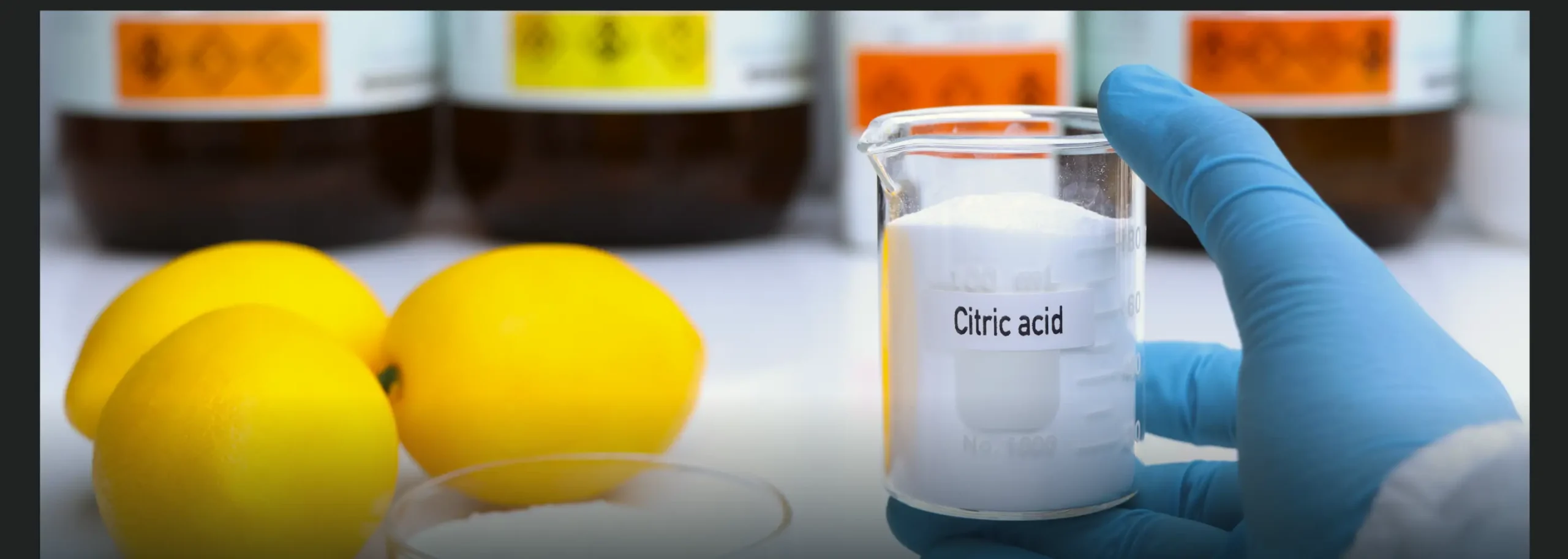
Citric Acid
Table of Contents
ToggleApplications

Food & Beverage: used as an acidity regulator, flavor enhancer, and preservative in drinks, confectionery, and processed foods

Pharmaceutical: functions as a pH adjuster, effervescent agent, and stabilizer in formulations.
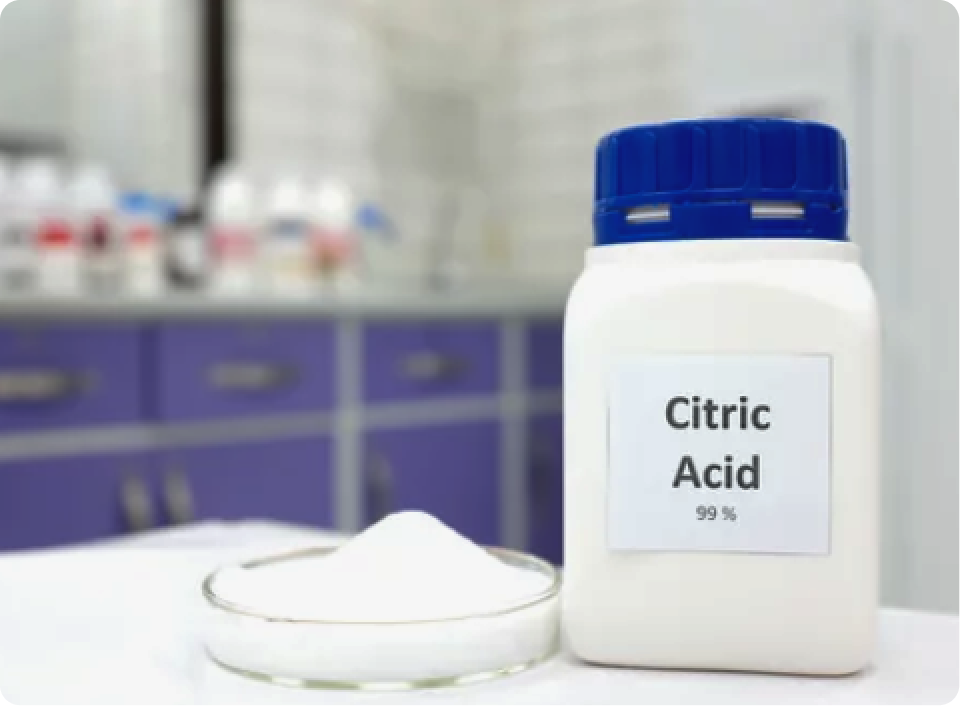
Industrial & Technical: applied in detergents, metal cleaning, water treatment, and cosmetics for its chelating and buffering properties.
Forms & Grades
Citric Acid Anhydrous
Solid crystalline form, ideal where moisture sensitivity is required.
Available Grades:
- Food / FCC
- USP / EP / BP
- Industrial
Citric Acid Monohydrate
Solid crystalline form with one molecule of water, widely used in food, pharma, and industrial applications.
Available Grades:
- Food / FCC • USP / EP / BP • Industrial
Liquid Citric Acid
Pre-dissolved in water, suited for process industries and cleaning formulations.
Available Grades:
- Food / FCC • Industrial
Technical Identification
- CAS Number: 77-92-9
- EC Number: 201-069-1
Regulatory Status
- Food-grade: compliant with EU food regulations and FDA requirements
- Industrial-grade: aligned with international chemical regulations such as REACH
Industrial Citric Acid Supplier in Europe | EU Compliant Bulk Supply Solutions
Selecting an Industrial Citric Acid supplier Germany is not simply about finding the lowest price. For manufacturers across Europe, the right supplier must consistently deliver EU-compliant citric acid, verified quality documentation, reliable bulk logistics, and stable product availability. Whether you operate in food production, pharmaceuticals, industrial cleaning, or chemical manufacturing, choosing a supplier with transparent certifications and dependable supply capabilities reduces production risks and ensures long-term operational efficiency.
This guide explains how to evaluate industrial citric acid suppliers in Europe, the differences between monohydrate and anhydrous grades, essential EU compliance requirements, and the industries that rely on high-purity citric acid. By the end, you will understand what distinguishes a trusted bulk supplier and which technical factors should influence your purchasing decisions.
Understanding Industrial Citric Acid Properties and Uses
Industrial citric acid is one of the world’s most versatile organic acids, widely used because of its excellent chelating ability, buffering capacity, acidity regulation, and environmentally friendly characteristics. Produced primarily through controlled fermentation, industrial citric acid offers consistent purity levels suitable for a broad range of manufacturing sectors.
For companies searching for an Industrial Citric Acid supplier Germany, product consistency is often more important than price alone. Variations in purity, moisture content, particle size, or packaging quality can directly affect production efficiency, product stability, and regulatory compliance.
Citric acid functions as:
- A pH regulator
- A chelating agent for metal ions
- A preservative enhancer
- An antioxidant synergist
- A cleaning and descaling ingredient
- A formulation stabilizer
These properties make it suitable for industries requiring predictable chemical performance and repeatable production results.
European manufacturers also value citric acid because it is biodegradable and aligns with modern sustainability objectives. Compared with harsher mineral acids, citric acid provides effective cleaning and processing performance while reducing environmental impact in many industrial applications.
A professional Citric Acid Supplier Europe should therefore provide not only high-quality material but also complete technical documentation, consistent batch quality, and supply chain transparency that supports industrial production throughout Europe.
Bulk Citric Acid Supplier in Europe for Industrial Manufacturing
Silvari Group supplies bulk citric acid for manufacturers, distributors, formulators and industrial buyers across Europe. Citric acid is widely used in food and beverage production, pharmaceutical formulations, industrial cleaning, water treatment, cosmetics and chemical manufacturing because of its acidity-regulating, chelating, buffering and formulation-supporting properties.
As a citric acid supplier in Europe, Silvari Group supports B2B procurement requirements for both Citric Acid Anhydrous and Citric Acid Monohydrate, with grades suitable for food, pharmaceutical and industrial applications. Product availability, packaging, documentation and delivery requirements can be coordinated according to the intended application and purchasing volume.
Industrial buyers sourcing citric acid in bulk typically evaluate more than price alone. Grade consistency, technical documentation, regulatory requirements, packaging, traceability and reliable logistics can all affect supplier qualification and long-term production continuity.
Citric Acid Grades Available for Bulk Supply
Citric acid is available in different grades and physical forms depending on manufacturing requirements. Selecting the correct grade is especially important where moisture content, regulatory compliance, formulation stability or processing conditions influence the final product.
Citric Acid Anhydrous
Citric Acid Anhydrous is the water-free crystalline form of citric acid. It is commonly selected for dry blends, powdered formulations and applications where additional moisture should be minimized. It is widely used across food, pharmaceutical and industrial production.
For procurement teams searching for a citric acid anhydrous supplier, key considerations include required grade, purity specification, particle characteristics, packaging format, technical documentation and expected annual consumption.
Citric Acid Monohydrate
Citric Acid Monohydrate contains one molecule of crystallization water and is widely used in beverage production, food processing, pharmaceuticals and a range of industrial applications. Its strong water solubility and broad formulation compatibility make it one of the most commonly used commercial forms of citric acid.
Bulk quantities of citric acid monohydrate can be sourced for industrial production where consistent quality, documentation and predictable supply are required.
Citric Acid Anhydrous vs Monohydrate
Both forms provide the core functional properties associated with citric acid, but their moisture content and processing characteristics can make one form more suitable than the other for a particular formulation.
| Property | Citric Acid Anhydrous | Citric Acid Monohydrate |
|---|---|---|
| Physical form | Water-free crystalline citric acid | Crystalline citric acid containing water of crystallization |
| Typical use | Dry blends and moisture-sensitive formulations | Food, beverages, pharmaceuticals and general industrial processing |
| Key consideration | Lower moisture contribution | Broad processing versatility |
| Supply format | Available for bulk procurement | Available for bulk procurement |
Buyers comparing citric acid monohydrate vs anhydrous should select the grade according to the formulation, processing environment, applicable specification and moisture requirements rather than treating the two forms as interchangeable in every application.
Food Grade Citric Acid E330 for Manufacturing
Citric acid is widely used in food and beverage manufacturing as the food additive E330. Food-grade citric acid can support acidity regulation, flavor balance, formulation stability and processing requirements across a broad range of products.
Typical applications include beverages, confectionery, sauces, processed foods, powdered drink formulations and other products requiring controlled acidity.
Companies sourcing food grade citric acid in bulk may require specifications aligned with applicable food-industry standards such as FCC requirements, together with batch-specific quality documentation.
Common Food and Beverage Applications
- Acidity regulation in beverages
- Flavor profile adjustment
- Processed food formulations
- Confectionery manufacturing
- Powdered beverage systems
- Food preservation systems where citric acid forms part of the formulation strategy
Pharmaceutical Grade Citric Acid
Pharmaceutical grade citric acid is used in applications including effervescent formulations, syrups, buffered systems and other pharmaceutical preparations where defined quality specifications and supplier documentation are required.
Depending on the intended market and application, pharmaceutical buyers may request citric acid aligned with standards such as USP, European Pharmacopoeia (Ph. Eur.) or BP. The applicable specification should always be confirmed during the procurement and supplier-qualification process.
Technical and regulatory documentation can support quality-control teams during supplier approval, incoming material assessment and ongoing procurement.
Industrial Citric Acid Applications
Beyond food and pharmaceutical applications, industrial citric acid is used across manufacturing processes that benefit from its acidity, buffering and metal-ion complexing properties.
- Industrial cleaning and descaling
- Water treatment processes
- Metal cleaning and surface preparation
- Detergent and cleaning formulations
- Cosmetic and personal-care formulations
- Chemical manufacturing
- Textile and process applications
- pH adjustment and formulation control
For a technical explanation of its descaling mechanism, see our guide to citric acid for limescale removal.
Buyers comparing mild organic-acid cleaning options can also review our citric acid vs vinegar for descaling comparison.
Citric Acid Technical Identification
Technical identification is important when procurement, regulatory and quality-control teams evaluate industrial raw materials.
| Product | Citric Acid |
|---|---|
| CAS Number | 77-92-9 |
| EC Number | 201-069-1 |
| Chemical Formula | C6H8O7 |
| Molecular Weight | 192.12 g/mol |
| Commercial Forms | Anhydrous and Monohydrate |
| Typical Grades | Food, Pharmaceutical and Industrial |
Final specifications should be confirmed against the relevant product specification and batch documentation before use in regulated or technically sensitive applications.
Citric Acid COA, SDS and Technical Documentation
Documentation is an important part of industrial chemical procurement. Depending on grade, destination and customer requirements, supporting documents may include:
- Certificate of Analysis (COA)
- Safety Data Sheet (SDS)
- Technical Data Sheet (TDS)
- Certificate of Origin
- Batch traceability documentation
- REACH-related documentation where applicable
- Food or pharmaceutical grade documentation where applicable
- Shipping and export documentation
Procurement teams should confirm required specifications and documents before ordering so that the selected citric acid grade matches the intended manufacturing process and regulatory environment.
Bulk Citric Acid Supply for European Buyers
Manufacturers searching for a bulk citric acid supplier generally require predictable availability, consistent specifications and a supply structure that can support recurring production requirements.
Silvari Group works with industrial buyers requiring citric acid for manufacturing and commercial applications across Europe. Supply requirements can vary according to product grade, order volume, destination, packaging and delivery schedule.
Our standard commercial minimum order quantity is 1 metric ton (1,000 kg). Sample quantities may also be available for evaluation where appropriate. Buyers with recurring demand can discuss scheduled deliveries and longer-term supply arrangements according to purchasing requirements.
What Industrial Buyers Should Check Before Ordering
- Required citric acid grade
- Anhydrous or monohydrate form
- Applicable food, pharmaceutical or industrial specification
- Required technical documentation
- Packaging requirements
- Estimated purchasing volume
- Delivery destination
- Recurring or one-time supply requirements
Citric Acid for Industrial Descaling and Cleaning
Citric acid is frequently selected for industrial cleaning and descaling processes because it can react with mineral deposits while also complexing metal ions. Its use depends on concentration, substrate compatibility, process temperature, contact time and the type of deposit being treated.
For buyers evaluating citric acid specifically for cleaning operations, our detailed article on how citric acid removes limescale explains the underlying chemistry and important process considerations.
Learn More About Citric Acid
Procurement pages should answer commercial questions, while technical resources can provide deeper information about applications and chemical behavior. Silvari Group has developed supporting resources covering different parts of the citric acid topic cluster.
- What Is Citric Acid and How Is It Used?
- How Citric Acid Removes Limescale
- Citric Acid vs Vinegar for Descaling
For bulk purchasing, grade selection, documentation or supply enquiries, contact Silvari Group with the required grade, quantity, destination and intended application.
FAQ
Frequently Asked Questions
Common questions from procurement managers and industrial buyers about sourcing Citric Acid Germany.
What industries use industrial citric acid?
Industrial citric acid is a versatile raw material used in a wide range of manufacturing sectors. It is commonly applied in food and beverage production as an acidity regulator and preservative, pharmaceutical formulations, industrial cleaning products, water treatment, metal processing, textile manufacturing, and various chemical applications. Thanks to its chelating properties and reliable performance, both monohydrate and anhydrous citric acid are widely used in industrial production across Europe.
Which types of citric acid do you supply?
We supply both Citric Acid Monohydrate and Citric Acid Anhydrous to meet the requirements of different industrial applications. Both grades are available in bulk quantities and comply with European quality standards. Depending on your production process, our technical team can recommend the most suitable grade based on moisture content, formulation requirements, and processing conditions.
What is your minimum order quantity for bulk citric acid?
Our standard minimum order quantity (MOQ) is 1 metric ton (1,000 kg) for commercial orders. We also provide smaller sample quantities for product evaluation upon request. For customers with recurring purchasing requirements, we can discuss flexible supply arrangements and long-term procurement agreements tailored to annual demand.
What documents are included with your citric acid shipments?
Every shipment is supplied with comprehensive technical and regulatory documentation to support quality assurance and compliance requirements. Depending on the destination and application, documentation may include:
- Certificate of Analysis (COA)
- Safety Data Sheet (SDS)
- Technical Data Sheet (TDS)
- REACH compliance documentation (where applicable)
- Certificate of Origin
- Shipping and export documents
- Additional certificates requested by customers or regulatory authorities
Our documentation helps simplify supplier qualification, quality audits, and import procedures for industrial buyers throughout Europe.
Do you supply citric acid for pharmaceutical applications?
Yes. We can supply pharmaceutical-grade citric acid that complies with internationally recognized quality standards, including USP and European Pharmacopoeia (Ph. Eur.) specifications where required. Each batch undergoes strict quality testing for purity, identity, and other critical parameters, and is supported by complete technical documentation to facilitate supplier approval and regulatory compliance.
Can I arrange a long-term supply agreement?
Yes. We offer long-term bulk supply agreements for manufacturers seeking stable pricing, reliable inventory availability, and scheduled deliveries. These agreements can be customized based on purchasing volume, delivery frequency, and operational requirements, helping customers maintain a secure and predictable supply chain for industrial citric acid.
Need help choosing the right product or requesting a quote?
Our team is here to support you. Get in touch with us today.