
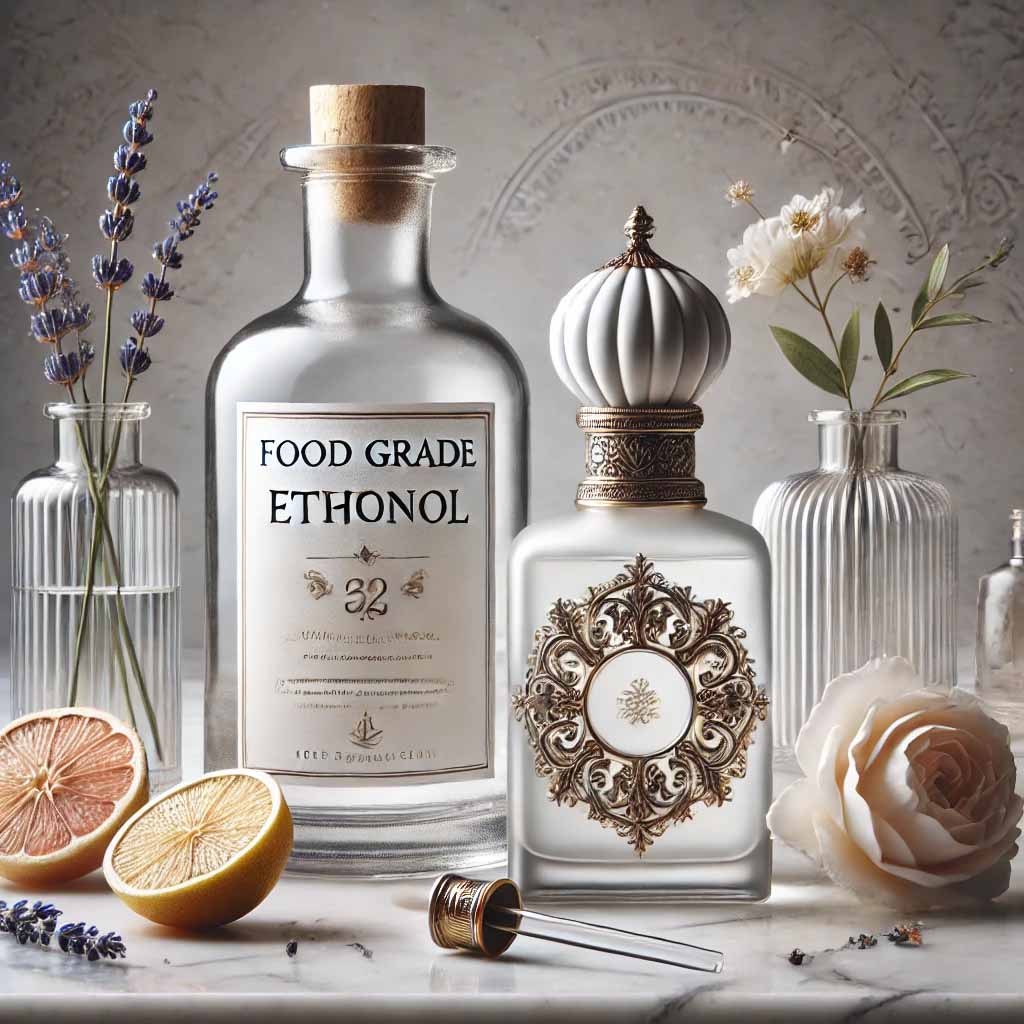
Creating your own signature scent has never been easier. 190 Proof Food Grade Ethanol To Make Perfume is one of the most effective and reliable solvents for crafting high-quality fragrances. At our guide, we’ll show you how to use this high-proof ethanol to extract essential oils and blend them into beautiful, long-lasting perfumes. This method offers a simple yet professional way to create personalized perfumes at home.
What is 190 Proof Food Grade Ethanol?
190 Proof Food Grade Ethanol is a high-concentration alcohol, containing 95% ethanol and 5% water. It is specifically distilled for use in food and beverages, ensuring it meets safety standards for human consumption. This high-proof ethanol is an excellent solvent, making it ideal for applications like perfume making, where purity and safety are crucial. Unlike other industrial-grade alcohols, food-grade ethanol is free from harmful chemicals and additives, making it suitable for personal care products and fragrances. Its strong alcohol content allows it to effectively extract essential oils, capturing the true essence of plant-based ingredients in perfumes.

Why Food Grade Ethanol Is Ideal for Perfume Making?
Food grade ethanol is the preferred choice for perfume making with ethanol due to several key factors:
- Purity and Safety: Food grade ethanol is free from harmful chemicals, ensuring that your perfume remains safe and non-toxic.
- Effective Extraction: Its high alcohol content efficiently extracts essential oils and fragrances from botanicals, preserving the integrity of the scent.
- Long Shelf Life: Ethanol helps preserve the fragrance for extended periods, maintaining the perfume’s potency.
- Versatility: It is compatible with various essential oils and other ingredients, offering flexibility in perfume creation.
Using food grade ethanol ensures that the perfume is both safe to use and effective, giving you high-quality, long-lasting results.
How to Make Perfume with 190 Proof Food Grade Ethanol?
Making perfume with 190 Proof Food Grade Ethanol is a simple, rewarding process that allows you to create your own signature fragrance. Below is a step-by-step guide to help you craft your personalized scent using Food Grade Ethanol for Perfume.
Step 1: Gather Your Ingredients
Before starting, ensure you have all the necessary ingredients for making perfume:
- Essential oils: Choose your favorite scents (floral, citrus, woody, etc.)
- 190 Proof Food Grade Ethanol: This high-proof alcohol will act as the base solvent.
- Distilled water: To dilute the perfume to your desired concentration.
- Airtight glass bottles: For storing your perfume.
- Glycerin (optional): For added smoothness and longevity.
Ensure you are working in a clean, well-ventilated space and have access to an accurate scale and measuring equipment.
Step 2: Prepare the Scent Blend
Start by selecting your essential oils. The blend will consist of three notes:
- Top Notes: The initial, lighter scents that you smell when you first apply the perfume (e.g., citrus, herbs).
- Middle Notes: The heart of the fragrance, which defines the perfume (e.g., lavender, rose).
- Base Notes: The deeper, longer-lasting scents that linger after the top notes dissipate (e.g., sandalwood, vanilla).
To make perfume with ethanol, start by adding your essential oils to the glass container. A typical ratio is about 30% top notes, 50% middle notes, and 20% base notes, but feel free to experiment based on your preferences.
Step 3: Add 190 Proof Food Grade Ethanol
Once the essential oils are blended, it’s time to add 190 Proof Food Grade Ethanol. The ethanol acts as the solvent that dissolves the essential oils, extracting their full potential and creating the fragrance base. For a natural perfume with ethanol, the general guideline is to use about 70-80% ethanol to 20-30% essential oil blend, depending on the strength of the scent you desire.
Step 4: Let the Mixture Age
After combining the oils and ethanol, seal the glass bottle tightly. Store the mixture in a cool, dark place to allow it to age and meld together. The aging process can take anywhere from two weeks to a month, depending on your desired fragrance intensity. Shake the bottle gently once every few days to help the oils fully blend.
Step 5: Dilute with Distilled Water
Once your perfume has aged, you can dilute it with distilled water to achieve the desired concentration. Add the water slowly, testing as you go, until you reach the strength you want. If the perfume is too strong, add more water. If it’s too weak, you can always add more ethanol or essential oils, but be cautious as this can change the balance of your fragrance.
Step 6: Bottle and Store Your Perfume
Once the perfume has reached your preferred scent and strength, transfer it to smaller, airtight perfume bottles for easy application. Make sure the bottle is sealed tightly to preserve the scent. Store your finished perfume in a cool, dark place to ensure its longevity.
Step 7: Test and Adjust the Fragrance
It’s always a good idea to test the perfume after it’s settled. If you find that some notes are too overpowering or too subtle, you can adjust by adding a bit more of certain essential oils or even ethanol. Ethanol in fragrance production plays a crucial role in balancing the scent, ensuring the fragrance lasts longer and blends seamlessly. This step allows you to fine-tune the perfume to your exact liking, achieving the perfect combination of notes that suit your personal taste.

Safety Considerations When Using Ethanol in Perfume
When using ethanol in perfume formulation, safety is paramount. 190 Proof Food Grade Ethanol is a highly concentrated substance, so it’s important to handle it with care. Always work in a well-ventilated area to avoid inhaling fumes and wear protective gloves to prevent skin irritation. Ensure proper storage by keeping ethanol in a tightly sealed container and away from heat sources, as it is flammable.
Additionally, when making perfume, avoid direct contact with eyes and mouth. Using ethanol in perfume formulation is safe as long as proper safety precautions are taken. This will help ensure a safe, effective, and high-quality perfume-making experience.
Conclusion
In conclusion, using 190 Proof Food Grade Ethanol to make perfume offers an excellent, safe, and effective method for creating high-quality, natural fragrances. Its ability to efficiently extract and preserve the essential oils ensures a clean, long-lasting perfume. By following proper safety measures and experimenting with different essential oil blends, you can craft a unique and personalized fragrance. Whether you’re a beginner or an experienced perfumer, ethanol provides a versatile and reliable foundation for perfume making, ensuring a smooth, aromatic process that results in a fragrance you’ll cherish.
FAQs
Can I use ethanol for perfume making?
190 Proof Food Grade Ethanol is a popular choice as it effectively extracts essential oils while being safe for skin contact when diluted properly.
Can I use Everclear to make perfume?
Everclear is a type of 190 Proof Food Grade Ethanol and can be used to make perfume. It works as a solvent to dissolve essential oils and create a smooth, aromatic fragrance.
Which grade ethanol is used in perfume?
The most commonly used ethanol for perfume making is 190 Proof Food Grade Ethanol, which is highly concentrated and safe for extracting essential oils.
What is the difference between 190 proof and 200 proof ethanol for perfume?
200 Proof Ethanol contains higher alcohol content (100%) compared to 190 Proof Ethanol (95%). 190 Proof is often preferred due to its slightly lower concentration, making it safer for use in skin contact.