


Polyoxymethylene (POM), also known as acetal or polyacetal, is a high-performance engineering thermoplastic that has carved a significant niche in industrial applications. Its combination of mechanical strength, rigidity, and wear resistance has made it an essential material for various industries, particularly where precision and durability are required. For companies like Silvari Group, which sources and distributes high-quality engineering plastics, POM represents an excellent choice due to its versatility and resilience, meeting diverse market needs.
General Description of Polyoxymethylene (POM)
POM is a crystalline thermoplastic commonly available in both homopolymer and copolymer forms. Recognized for its excellent dimensional stability, low friction coefficient, and outstanding resistance to solvents, it provides reliability in applications where parts undergo regular stress. These characteristics make it invaluable in producing gears, fasteners, bearings, and a broad range of industrial components. POM is often preferred over other plastics due to its rigidity and strength, providing metal-like performance in various applications.

Structure and Properties of Polyoxymethylene
POM’s structure consists of repeating -CH2O- units, giving it a high degree of crystallinity and rigidity. This molecular structure accounts for its notable resistance to fatigue and creep. POM has a high tensile strength, low moisture absorption, and outstanding resistance to a wide array of solvents and chemicals, making it particularly suited for industrial settings where exposure to various substances is typical. Additionally, POM’s low coefficient of friction ensures smooth mechanical movement, especially beneficial in applications where parts move or slide against each other.
Production of Polyoxymethylene
The production of POM primarily involves the polymerization of formaldehyde or trioxane. This is achieved through various industrial methods that yield both homopolymers and copolymers, each with distinct characteristics. Homopolymer POM is generally harder and denser, whereas copolymer POM offers better chemical resistance and is more stable in high-temperature environments. The choice between the two forms depends on the intended application and the specific requirements of the component being produced.

How is Polyoxymethylene Made?
POM is typically manufactured through the polymerization of formaldehyde, a process that transforms the monomer into a stable polymer structure. In the case of copolymer POM, trioxane (a form of cyclic formaldehyde) is co-polymerized with other monomers to produce a polymer chain that is more thermally stable and chemically resistant. This production process allows POM to achieve a balance between rigidity and flexibility, contributing to its resilience in high-performance settings.
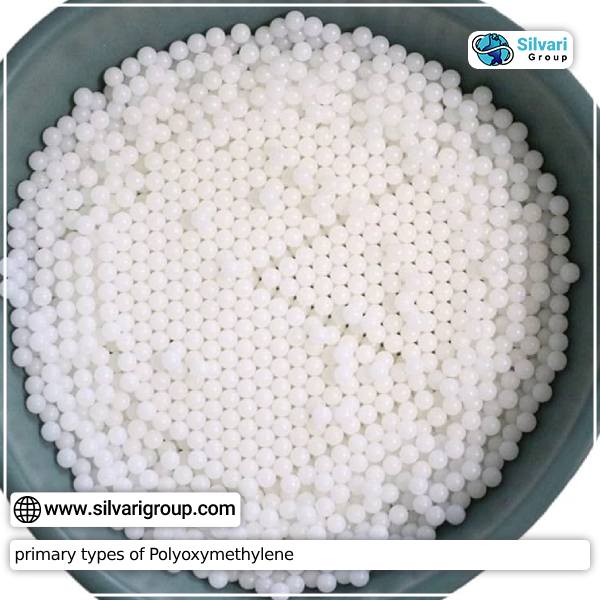
primary types of Polyoxymethylene
Polyoxymethylene (POM) primarily exists in two types: homopolymer (POM-H) and copolymer (POM-C). The homopolymer offers high crystallinity, providing greater rigidity, strength, and fatigue resistance, making it ideal for precision parts. The copolymer, with added stability from comonomer units, delivers enhanced thermal and chemical resistance, which helps prevent degradation in tougher environments. Both types are valued in engineering applications for their durability and low friction.
Polyoxymethylene Copolymer
POM copolymer, as opposed to its homopolymer counterpart, includes additional monomers to improve stability in challenging conditions. This variant of POM offers higher resistance to heat and chemicals, making it ideal for applications in environments where exposure to aggressive solvents or sustained high temperatures is common. POM copolymer is particularly useful in applications requiring precision engineering, as it maintains structural integrity and dimensional stability over extended periods.
lick to buy industrial products from Silvarigroup
Chemical Resistance of Polyoxymethylene
One of POM’s key attributes is its exceptional chemical resistance. This thermoplastic remains unaffected by many chemicals, including hydrocarbons, alcohols, and organic solvents. Its chemical stability is crucial in industrial applications where components must withstand exposure to various chemicals without degrading or losing functionality. However, it is essential to note that POM can be sensitive to strong acids and oxidizing agents, necessitating careful selection in corrosive environments.

High-Temperature/High-Performance Polymers
POM belongs to a broader category of high-performance polymers designed to withstand high temperatures and rigorous conditions. Its ability to maintain mechanical integrity at elevated temperatures makes it a valuable choice for applications that demand thermal stability. Within this category, POM is distinguished by its balance of cost, performance, and ease of processing, positioning it as a competitive alternative to more expensive engineering plastics.
Applications of Polyoxymethylene
Due to its unique properties, POM is widely used across numerous industries. In the automotive sector, it is used for fuel systems, lock systems, and structural components. The electronics industry employs POM for various connectors, switches, and enclosures. Medical and consumer goods manufacturers also favor POM due to its low friction, durability, and ease of sterilization, making it ideal for precision parts such as gears, valves, and conveyor components. Its versatility has led to widespread adoption in engineering applications where longevity and resilience are essential.
Polyoxymethylene Sheet
POM sheets are commonly used in manufacturing due to their dimensional stability and ease of machining. These sheets are ideal for producing parts that require high precision and wear resistance, such as gears and fixtures. POM sheets are also preferred for prototyping and small-scale production, as they allow manufacturers to produce high-quality components with minimal waste. The ease of fabrication makes POM sheets a go-to material in sectors where efficient manufacturing processes are vital.

Engineering Plastics and POM’s Role
As a high-performance engineering plastic, POM stands out among other materials for its unique combination of properties. It competes with polyamides, polyesters, and polycarbonates, offering superior stiffness and wear resistance. In applications where metals are traditionally used, POM provides a lightweight alternative without compromising strength or durability. Its role in engineering plastics is critical, as it allows for greater design flexibility and innovation in product development.
Capacity and Consumption of Polyoxymethylene
Global demand for POM continues to grow, driven by increasing industrialization and the need for durable, high-performance materials. Major markets for POM include automotive, electronics, and medical sectors, with applications expanding as industries recognize its versatility and reliability. The capacity and consumption of POM are expected to rise as industries look for cost-effective alternatives to metals and more expensive polymers, particularly in applications requiring precision and durability.
Preparation and Characterization of Polyoxymethylene Nanocomposites
Recent advances have led to the development of POM nanocomposites, which incorporate nanoparticles to enhance properties such as strength, thermal stability, and resistance to wear. These nanocomposites open new possibilities for high-performance applications, particularly in industries that require materials with enhanced durability and functionality. Characterization techniques such as NMR spectroscopy provide insights into the molecular structure and behavior of POM nanocomposites, allowing manufacturers to tailor materials to specific applications.
Conclusion
Polyoxymethylene (POM) exemplifies the qualities sought in high-performance engineering thermoplastics: durability, chemical resistance, thermal stability, and ease of fabrication. For companies like Silvari Group, POM’s versatility and robust properties make it a valuable asset across industries, meeting the demands of sectors ranging from automotive to electronics. As demand for high-performance materials grows, POM remains a cornerstone in engineering plastics, providing reliable solutions for complex applications. The development of POM nanocomposites further enhances its potential, positioning it as a leading choice for future industrial innovations.
FAQs
What is Polyoxymethylene (POM) commonly used for?
POM is widely used in automotive, electronics, and consumer goods for producing gears, bearings, and structural components.
What are the primary types of Polyoxymethylene?
POM exists in homopolymer and copolymer forms, each offering distinct advantages depending on the application.
Is Polyoxymethylene resistant to chemicals?
Yes, POM resists a wide range of chemicals, though it is sensitive to strong acids and oxidizing agents.
Can POM withstand high temperatures?
POM is highly stable at elevated temperatures, making it suitable for high-performance applications.
Why choose POM over metal for manufacturing parts?
POM offers a lightweight, durable, and cost-effective alternative to metal, providing similar strength with easier fabrication options.
Polyoxymethylene, commonly referred to as POM, is a versatile engineering thermoplastic that is widely used across various industries and laboratories. This high-performance polymer is valued for its exceptional combination of mechanical properties, making it an ideal choice for manufacturing a wide range of components and products. In this comprehensive product description, we will delve into the main features, types, benefits, and applications of Polyoxymethylene, offering valuable insights for factories, manufacturers, and laboratories.
Main Features of Polyoxymethylene:
Polyoxymethylene boasts an array of outstanding features that set it apart as a favored material for numerous applications. Understanding these key characteristics is essential for optimizing its use:
- Exceptional Mechanical Properties:
- POM exhibits excellent tensile strength, stiffness, and impact resistance, making it a prime choice for applications that require durability and reliability.
- Its low coefficient of friction enhances wear resistance, reducing the need for frequent maintenance.
- High Chemical Resistance:
- POM is highly resistant to a wide range of chemicals, including solvents, fuels, and various industrial chemicals, ensuring stability and performance in harsh environments.
- Low Moisture Absorption:
- With minimal moisture absorption, POM retains its mechanical properties even in humid conditions, making it suitable for a wide range of applications.
- Dimensional Stability:
- POM maintains its shape and size even under fluctuating temperature and humidity conditions, ensuring precision in manufacturing.
- Excellent Machinability:
- POM is easy to machine, allowing for the production of intricate and precise parts with minimal effort.
- Good Electrical Insulation:
- POM’s electrical insulating properties make it suitable for electrical and electronic applications.
Types of Polyoxymethylene:
Polyoxymethylene comes in various forms, each tailored to meet specific requirements. The two primary types are:
Copolymer (POM-C):
- Copolymer POM-C, also known as Delrin, offers enhanced crystallinity, resulting in improved mechanical properties, such as stiffness and dimensional stability.
- Delrin is ideal for applications where high mechanical strength and low friction are paramount, such as gears, bearings, and automotive components.
Homopolymer (POM-H):
- Homopolymer POM-H is recognized for its superior creep resistance, chemical stability, and resistance to hydrolysis.
- POM-H is commonly used in applications like pump components, valve parts, and medical devices, where chemical resistance and reliability are crucial.
Benefits of Using Polyoxymethylene:
Polyoxymethylene’s unique properties offer a range of benefits for manufacturers, laboratories, and various industries:
- Durability and Longevity:
- POM’s exceptional mechanical strength and wear resistance result in long-lasting components, reducing maintenance costs and downtime.
- Chemical Resistance:
- POM’s resistance to chemicals ensures that it can withstand exposure to various substances, making it suitable for applications in corrosive environments.
- Low Friction and Self-Lubrication:
- POM’s low coefficient of friction reduces the need for additional lubrication in moving parts, increasing efficiency and reducing maintenance requirements.
- Dimensional Stability:
- The material’s resistance to dimensional changes due to temperature and humidity fluctuations ensures precise and consistent performance in diverse conditions.
- Machinability:
- POM’s ease of machinability allows for intricate part designs and efficient manufacturing processes, saving time and resources.
- Electrical Insulation:
- POM’s electrical insulating properties make it an excellent choice for electronic and electrical applications, providing safety and reliability.
Applications of Polyoxymethylene in Different Industries:
Polyoxymethylene is extensively utilized across various industries due to its versatile properties. Here are some of the key applications in different sectors:
-
Automotive Industry:
- POM is commonly used in automotive applications, including gears, bushings, and fuel system components, where its low friction and high strength are crucial for optimal performance and durability.
-
Aerospace Industry:
- In aerospace, POM finds applications in the production of interior components, fasteners, and structural elements due to its lightweight and durable nature.
-
Healthcare and Medical Devices:
- POM-H is suitable for medical devices and equipment due to its biocompatibility and resistance to chemical disinfectants, making it a preferred choice for components like surgical instruments and drug delivery systems.
-
Electrical and Electronics:
- POM’s electrical insulating properties make it a valuable material for electrical connectors, switches, and insulators, ensuring safety and reliability in electrical applications.
-
Industrial Machinery:
- POM is widely used in industrial machinery, such as conveyor systems, roller chains, and couplings, thanks to its excellent wear resistance and low maintenance requirements.
-
Consumer Goods:
- POM is found in everyday consumer goods like zippers, snap fasteners, and ski bindings due to its low friction and durability, ensuring smooth operation and extended product life.
-
Food Processing:
- In the food industry, POM is employed in various components of processing equipment, such as conveyor belts and gears, where its resistance to food-related chemicals and moisture is advantageous.
-
Plumbing and Water Treatment:
- POM’s resistance to water and chemicals makes it suitable for plumbing components, valves, and water treatment equipment, where long-term reliability is essential.
-
Sporting Goods:
- POM is used in the manufacture of sporting equipment like tennis racket strings, ski bindings, and gun components due to its lightweight, durable, and low-friction properties.
-
Laboratory Equipment:
- Laboratories benefit from POM’s chemical resistance and dimensional stability when used in the construction of scientific instruments, sample-handling equipment, and precision components.
Product Category:
Polyoxymethylene falls under the category of engineering thermoplastics, a group of materials that exhibit excellent mechanical properties and are widely used in applications where high-performance materials are required.
In conclusion
Polyoxymethylene, or POM, is a highly versatile engineering thermoplastic with exceptional mechanical properties, low friction, and resistance to chemicals and moisture. Its two primary forms, copolymer and homopolymer, cater to different application needs. Manufacturers, laboratories, and various industries find POM indispensable for its durability, ease of machinability, and reliability. Whether it’s in the automotive, aerospace, healthcare, or consumer goods sectors, POM plays a vital role in ensuring the success of countless applications. As you consider incorporating POM into your processes, you can harness its numerous benefits to optimize your manufacturing, reduce maintenance costs, and enhance product longevity.