
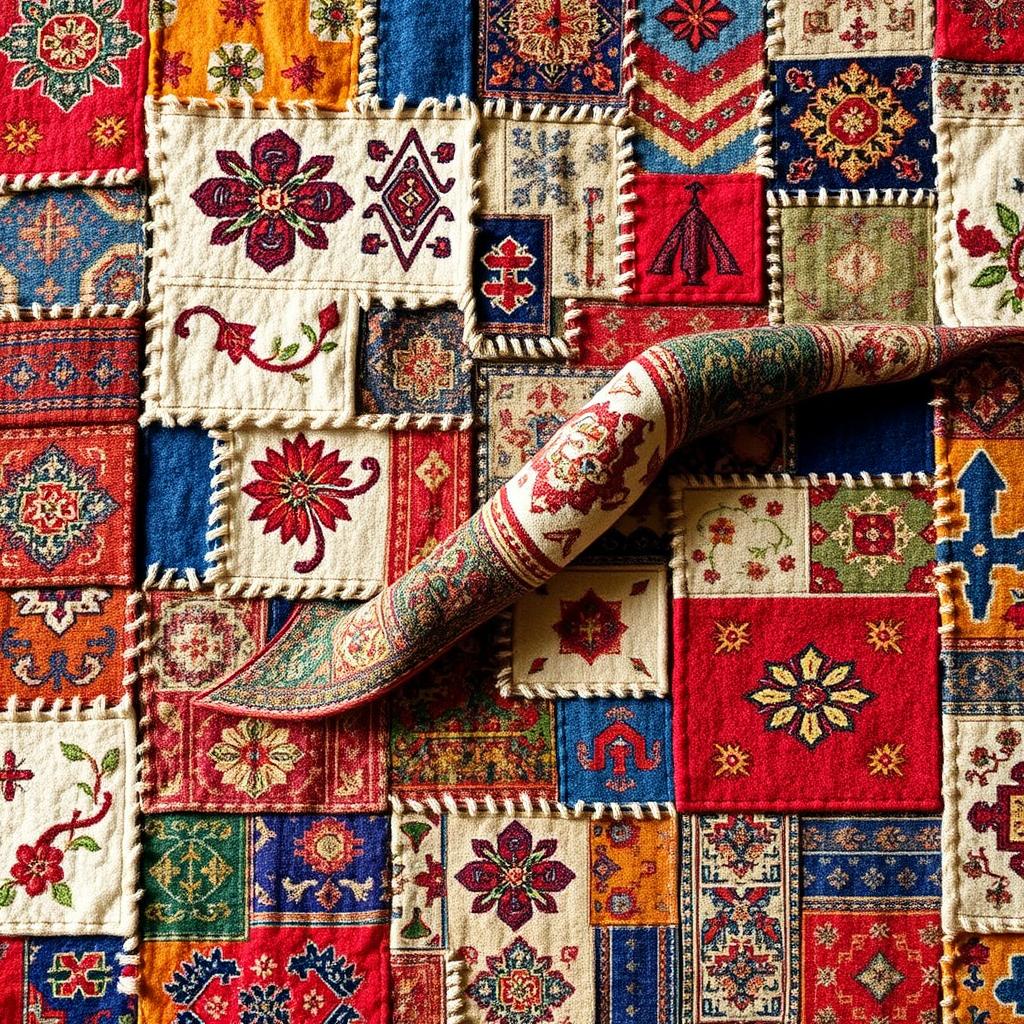
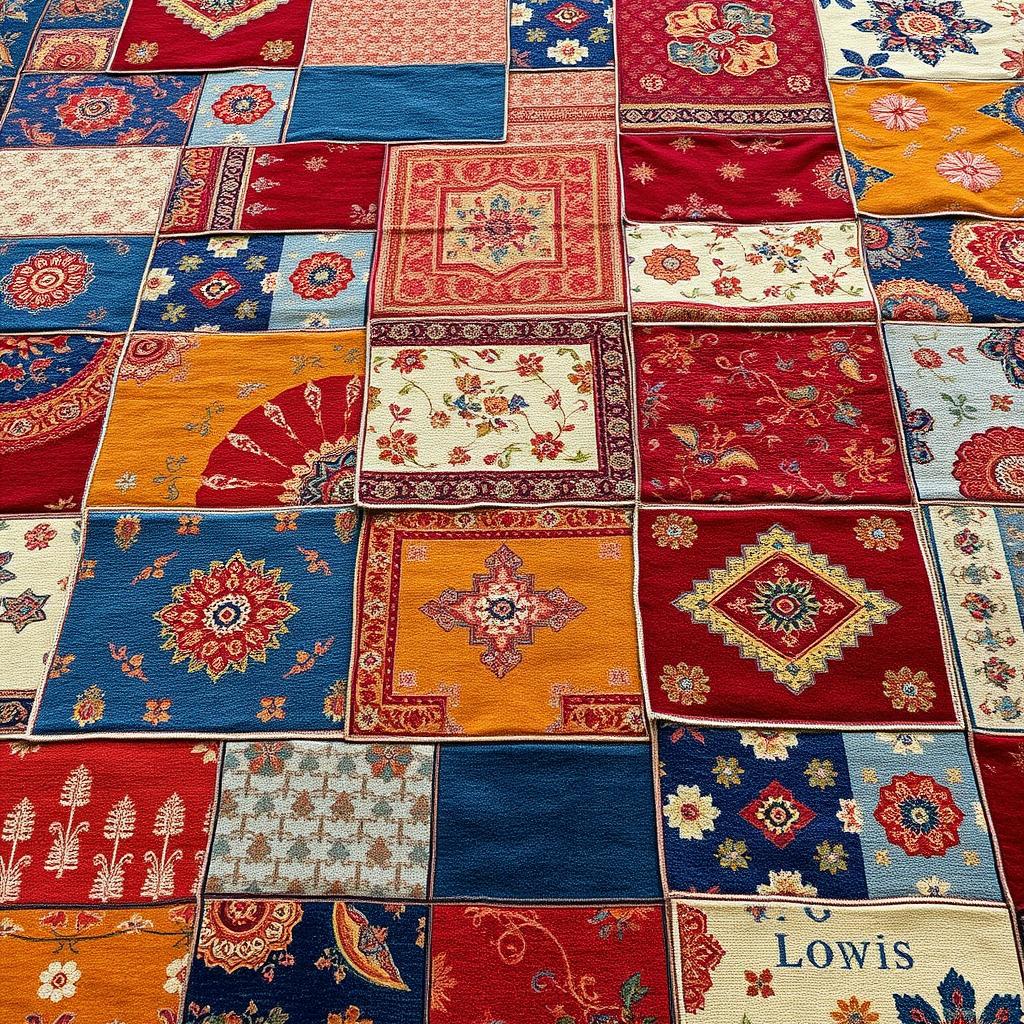
Step into a world where fabric fragments come together in a symphony of colors and textures. This creates a captivating masterpiece that adorns the floors of homes and commercial spaces alike. Patchwork carpets, a unique form of textile art, have long been celebrated for their ability to transform the ordinary into the extraordinary. But what is it about these handcrafted rugs that has captured the hearts and imaginations of design enthusiasts across the globe?
Click to use Silverigroup personal shopper services
Prepare to embark on a journey that unveils the intricate artistry, rich history, and cultural significance behind these captivating floor coverings. From the ancient traditions that have shaped their evolution to the modern interpretations that push the boundaries of design, patchwork carpets offer a tapestry of stories waiting to be unraveled. Are you ready to discover the hidden depths of this captivating artform?
Key Takeaways:
- Patchwork carpets are a unique form of textile art that combine various fabric pieces to create distinctive designs.
- These handcrafted rugs serve as both functional and artistic elements in interior design.
- Patchwork carpets have a rich history that is deeply rooted in cultural traditions and artistic expression.
- The versatility of patchwork carpets allows them to be seamlessly integrated into modern living spaces.
- Exploring the world of patchwork carpets offers a glimpse into the incredible craftsmanship and creativity that goes into their creation.
Understanding the Art of Patchwork Carpet
Patchwork carpets are more than just floor coverings. They are intricate works of art that have amazed people for centuries. These carpets started from simple beginnings but have become highly valued treasures in the world of vintage rugs and antique carpets.
Click to buy antique rugs from Silverigroup
Origins and Historical Significance
The history of patchwork carpets goes back to ancient rug weaving. Artisans used scraps of fabric and leftover materials to create stunning and practical carpets. This showed their creativity and reflected the culture and society of their communities.
Traditional vs. Modern Techniques
The way patchwork carpets are made has changed a lot over time. Traditional methods are still loved, with artisans carefully stitching and weaving patterns. But now, new materials and technologies have opened up new possibilities in this art form. Today, patchwork carpets mix the beauty of the past with modern innovation.
Cultural Impact on Design
The designs of patchwork carpets show the diversity of cultures around the world. They range from the bright colors and geometric patterns of Middle Eastern carpets to the soft tones and natural designs of Scandinavian rugs. Each carpet tells a unique story, taking us to the heart of its cultural roots. Exploring patchwork carpets reveals a world of history, tradition, and innovation. This world continues to inspire and fascinate those interested in rug weaving and vintage rugs.

Types of Patchwork Carpet Materials
Patchwork carpets are a unique and captivating form of textile art. They offer a wide range of materials that make them stand out. From the timeless elegance of wool to the delicate sheen of silk, the materials used in patchwork carpets play a key role in their look and feel.
Wool is a common material in patchwork area rugs. It’s prized for its durability, natural luster, and ability to withstand heavy foot traffic. Wool makes for long-lasting and visually striking floor coverings. Cotton adds a softer, more informal touch to patchwork textile art. Synthetic fibers like polyester or nylon offer a more affordable and low-maintenance option. Silk has become popular in patchwork carpets, adding luxury and opulence to any room. The shimmering, smooth texture of silk creates a mesmerizing visual effect. This is especially true when combined with the intricate patterns and vibrant colors that are hallmarks of patchwork design.
| Material | Appearance | Durability | Maintenance |
|---|---|---|---|
| Wool | Natural luster, soft texture | Highly durable, withstands heavy traffic | Requires regular vacuuming and professional cleaning |
| Cotton | Soft, informal touch | Moderately durable, suitable for medium traffic | Relatively easy to clean, can be machine-washed |
| Silk | Shimmering, luxurious appearance | Delicate, not suitable for high-traffic areas | Requires gentle cleaning and professional care |
| Synthetic Fibers (Polyester, Nylon) | Vibrant colors, easy to maintain | Moderately durable, suitable for medium traffic | Easy to clean, can be machine-washed |
The choice of material in patchwork carpets affects their look and practicality. It influences their durability, maintenance, and suitability for different spaces. Knowing the unique properties of each material helps homeowners and designers choose the perfect patchwork floor covering for their needs.
Design Elements and Pattern Combinations
Creating stunning patchwork carpets requires careful design and pattern choices. The colors and textures used are key to their beauty. Each element adds to the overall look of these unique floor coverings.
Color Theory in Patchwork
Patchwork carpets blend colors in a way that’s both harmonious and visually appealing. Color theory helps designers create balanced and cohesive designs. By using the right colors, a room can be transformed into a masterpiece.
Popular Pattern Styles
- Geometric Patterns: These patterns feature bold shapes and clean lines, adding a modern touch to patchwork carpet ideas.
- Floral Motifs: These patterns bring a soft, organic beauty to patchwork carpets, adding a natural elegance.
- Tribal Designs: Inspired by ancient cultures, these patterns have intricate, abstract designs that bring a global, bohemian feel.
Texture Combinations
Using different textures is crucial in making patchwork carpets stand out. Mixing smooth, velvety fabrics with rough natural fibers and delicate embroidery creates a stunning look. This mix adds depth and luxury to any room.
| Design Element | Description | Examples |
|---|---|---|
| Color Theory | Harmonious color combinations that create a cohesive and visually appealing patchwork design | Complementary, analogous, and monochromatic color schemes |
| Pattern Styles | Popular patchwork patterns that showcase a range of aesthetics | Geometric, floral, and tribal designs |
| Texture Combinations | The interplay of diverse textures that adds depth and luxury to patchwork carpets | Smooth, rough, and embroidered fabrics |
Handcrafted Patchwork Rugs: A Closer Look
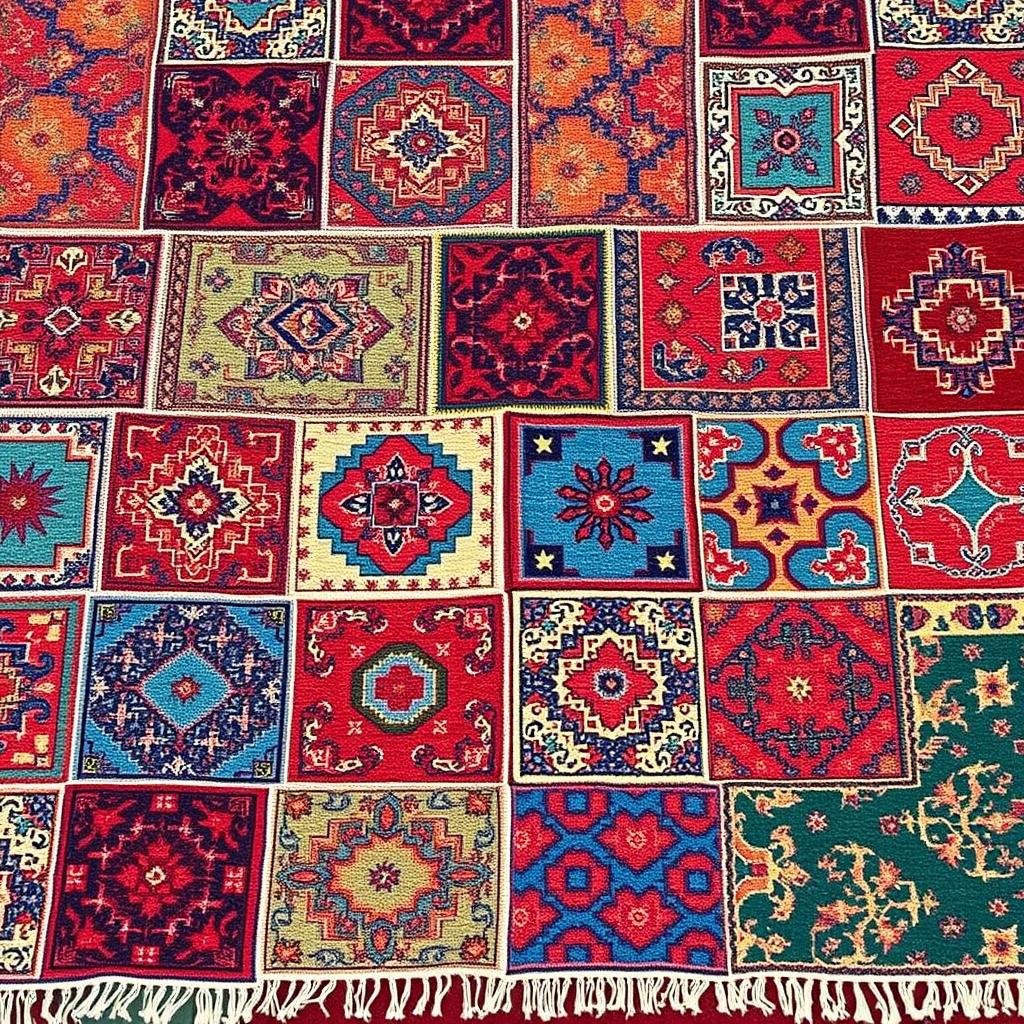
In the world of textile art, handcrafted patchwork rugs are truly special. They are not just floor coverings but works of art. Each rug tells a story through every stitch and fabric swatch. The art of rug weaving has been around for centuries. But the patchwork technique is a modern twist on this ancient craft. It combines old methods with new design ideas.
Making a handcrafted patchwork rug is a labor of love. It requires knowledge of color, pattern, and fabric selection. Master weavers choose unique fabrics, often using vintage or handwoven materials. Unlike machine-made rugs, each handcrafted patchwork rug is unique. It shows the personal touch and vision of its creator. These rugs have depth, texture, and individuality that mass-produced rugs can’t match.
Patchwork rugs do more than cover floors. They transform any space with their warmth and artistic flair. They add beauty to a room while being practical and durable. Buying a handcrafted patchwork rug is more than a purchase. It’s owning a piece of history and textile art. Walking on these rugs, you feel the passion and creativity of the makers.
Incorporating Patchwork Carpet in Modern Interiors
Patchwork carpets add a special charm to modern interiors. They can make any room, from a cozy living area to a stylish bedroom, stand out. These vibrant floor coverings bring a unique elegance to any space.
Living Room Styling Tips
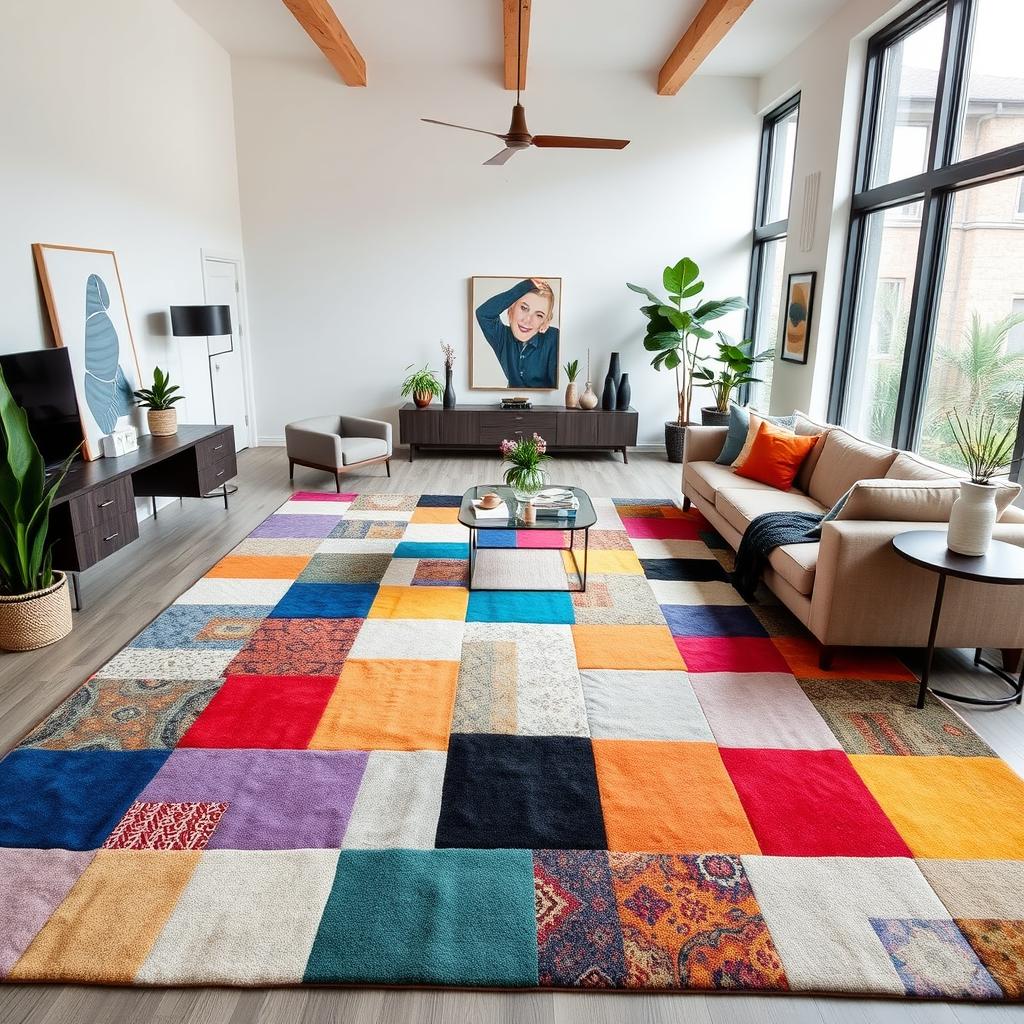
In the living room, a patchwork carpet can be the centerpiece. Match it with neutral furniture to let the carpet’s patterns take center stage. You can also add accent pieces that match the rug’s colors. For a unified look, hang patchwork-inspired art on walls. Or, use throw pillows that match the rug’s designs.
Bedroom Design Ideas
Patchwork carpets can make a bedroom warm and inviting. Place the rug over a solid-colored floor for a striking contrast. Or, use it as a soft base for your bed. Combine it with simple furniture and natural textures like linen bedding. Add wooden accents for a serene, bohemian vibe.
Commercial Space Applications
Patchwork carpets aren’t just for homes. They can also brighten up commercial spaces, like boutique hotels or trendy cafes. The vibrant patterns and textures create distinct areas and add interest. They help make the space welcoming and unique, setting it apart from others.
Maintenance and Care Tips for Your Patchwork Carpet
Keeping your handcrafted patchwork floor coverings looking great is important. Whether you have a unique rug or patchwork carpet tiles, these tips will help. They ensure your floor coverings stay vibrant and detailed.
Gentle Cleaning Techniques
Cleaning your patchwork carpet needs gentle methods. Stay away from harsh chemicals and rough scrubbing. These can harm the fabrics and colors. Use mild soap and warm water instead. Gently blot spills or stains right away. Vacuuming with a soft-bristle attachment helps remove dirt without damage.
Proper Storage and Maintenance
- Roll or fold your patchwork carpet for storage, being mindful not to crease or bend the fabric.
- Keep the carpet in a cool, dry place, away from direct sunlight or excessive moisture.
- Rotate your patchwork carpet periodically to ensure even wear and fading.
- Consider professional cleaning services for a more thorough and specialized cleaning when needed.
Preserving the Appearance
To keep your patchwork carpet looking good, think about where you place it. Avoid high-traffic spots and heavy furniture. Rotate the carpet to spread out wear and sunlight. With the right care, your patchwork carpet will remain a beautiful centerpiece for years.
Sustainable Aspects of Patchwork Carpet Making
Patchwork carpets have become popular in the world of textile art. They not only attract design fans but also highlight sustainable practices. The use of eco-friendly materials and upcycling shows the industry’s dedication to the environment.
Eco-friendly Materials
The heart of a sustainable patchwork carpet is its materials. Artisans now use natural fibers like wool, cotton, and silk. These are durable and can break down naturally. They also come from local sources, cutting down on carbon emissions from long trips. Plant-based dyes are used for coloring. This makes the carpets even greener.
Upcycling Techniques
- Upcycling is key in making patchwork carpets. It turns old fabric scraps into new carpets. This way, less waste is created and fewer new materials are needed.
- Old clothes, furniture covers, and even recycled saris are turned into unique carpets. This shows the creativity and care in this craft.
Environmental Impact
Making patchwork carpets is better for the planet than traditional methods. It uses less energy and natural materials. This makes the carpets more eco-friendly. Also, making these carpets supports local businesses and artisans. It helps the economy and society. The need for textile art and vintage rugs is rising. Patchwork carpet making shows a way to be green and responsible. It keeps cultural traditions alive while looking to a greener future.
Choosing the Right Patchwork Carpet for Your Space
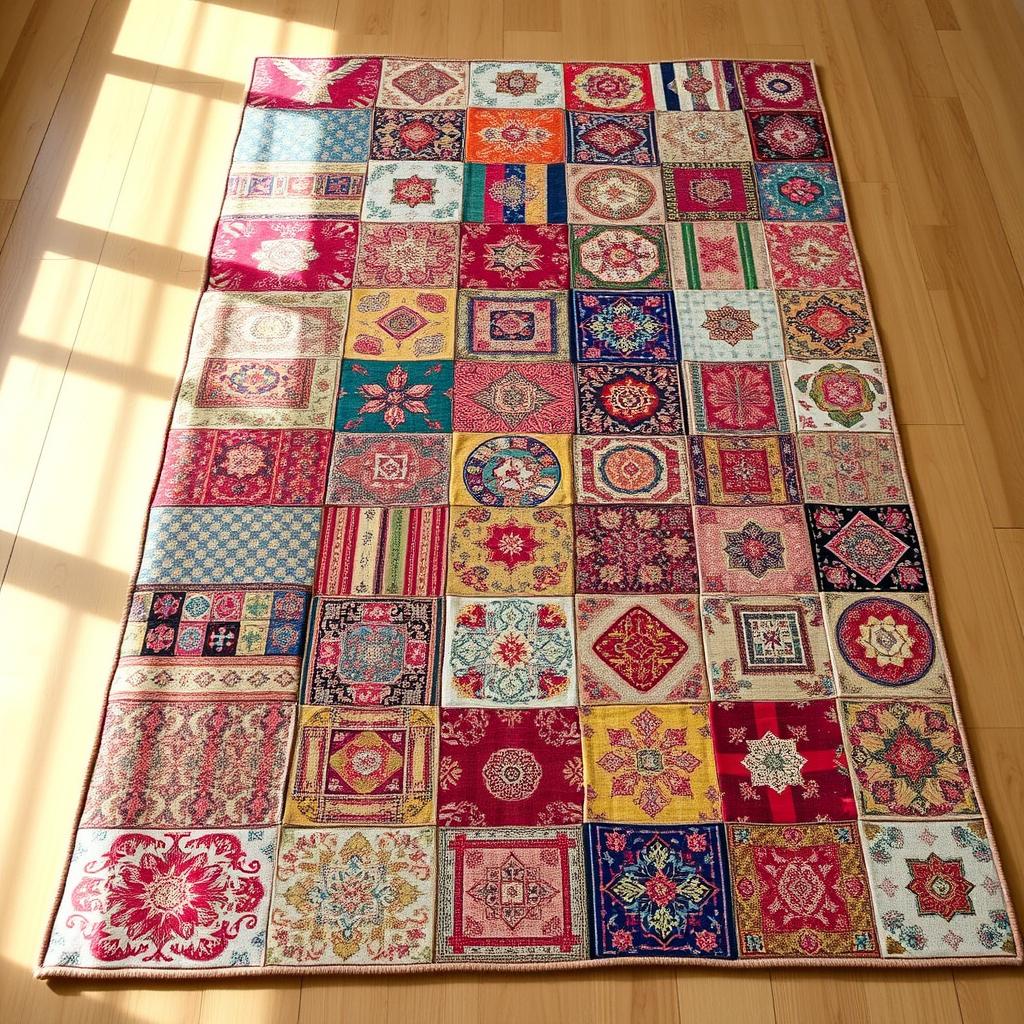
Finding the perfect patchwork carpet for your home is a fun and creative journey. It can make your living room cozy or your bedroom a cozy retreat. The right carpet can change how a room feels. When picking a patchwork carpet for sale, think about your room’s size, decor, and your style. Big rooms can handle bold, bright designs. Smaller rooms do better with softer, matching patterns.
Matching Patchwork Carpets with Interior Design Styles
Patchwork carpets fit many design styles, from farmhouse to modern. Here are some tips:
- For a modern look, choose a area rugs with simple designs and neutral colors.
- Go for a boho-chic vibe with a carpet that has lots of colors and patterns.
- For a traditional or transitional feel, pick a carpet with earthy tones and classic designs.
Finding the right patchwork carpet is about mixing your style, the room’s design, and function. With creativity and attention to detail, you can make your space beautiful and inviting.
Investment Value and Quality Assessment
Investing in antique carpets or vintage rugs requires knowing the price range and market value. Patchwork carpets, known for their intricate designs and rich cultural heritage, are highly sought after. They offer both beauty and potential for long-term growth in value.
Price Range Guidelines
The price of patchwork carpets varies widely. It depends on age, materials, condition, and rarity. Well-preserved antique carpets can cost from a few hundred dollars to tens of thousands. Modern, handcrafted patchwork rugs usually fall between $500 to $5,000, based on design complexity and craftsmanship.
Authentication Methods
Verifying a patchwork carpet’s authenticity is key to its value. Reputable auction houses, dealers, and appraisers employ various methods. They examine materials, dyes, weaving patterns, and historical context to confirm origin, age, and provenance.
Market Value Factors
| Factor | Impact on Market Value |
|---|---|
| Rarity and Uniqueness | Highly prized by collectors, driving up prices for one-of-a-kind or limited-edition patchwork carpets. |
| Condition and Preservation | Well-maintained and minimally-restored antique patchwork carpets command higher prices. |
| Cultural and Historical Significance | Patchwork carpets with strong ties to a specific region or era are highly valued by connoisseurs. |
| Artisanal Craftsmanship | Meticulously handcrafted patchwork rugs with intricate patterns and superior quality materials are prized assets. |
Understanding these factors helps collectors and designers make smart choices. They can invest in antique carpets or vintage rugs that enhance their spaces and appreciate in value over time.
Conclusion
The patchwork carpet has won the hearts of many, mixing old charm with new style. These handcrafted rugs add beauty and uniqueness to any room. They have a rich history and have evolved over time. These carpets fit well in many settings, like cozy living rooms or lively offices. They bring warmth and personality to any space. You can play with colors, patterns, and textures to make your space truly yours. Starting your patchwork carpet journey is exciting. It lets you see the beauty and skill in these special rugs. Choose patchwork for its timeless beauty and make it a highlight of your space.
FAQ: Patchwork Carpet
What are patchwork carpets?
Patchwork carpets are unique floor coverings made from different fabrics. These can include wool, cotton, or silk. They are handcrafted and have become popular in homes and businesses for their style and function.
What is the history and cultural significance of patchwork carpets?
Patchwork carpets have a long history, with roots in many cultures worldwide. They were made using traditional weaving methods and local materials. This has led to a wide range of styles and patterns today.
What types of materials are used in patchwork carpets?
Patchwork carpets use various materials like wool, cotton, silk, and synthetic fibers. The choice of material affects the carpet’s look, durability, and upkeep. Wool is soft and durable, while cotton and silk are lighter. Synthetic fibers are cheaper and easier to care for.
How do design elements and pattern combinations influence patchwork carpets?
The design and patterns of patchwork carpets are key to their beauty. Color, pattern styles, and textures all add to their unique look. These carpets often feature bold colors, intricate designs, and different textures for a striking effect.
What is the process of creating handcrafted patchwork rugs?
Making handcrafted patchwork rugs is a detailed process. Weavers pick and arrange fabric scraps, often using traditional methods. This craftsmanship makes each rug special and highly sought after.
How can patchwork carpets be incorporated into modern interiors?
Patchwork carpets fit well in modern interiors. They add warmth and texture to living rooms and coziness to bedrooms. They also enhance the look of commercial spaces like hotels and offices.
What are the maintenance and care tips for patchwork carpets?
Keeping patchwork carpets in good shape is important. Regular cleaning with gentle methods and solutions is key. Proper storage, like rolling or folding, also helps. Always follow the manufacturer’s care instructions for the best results.
What are the sustainable aspects of patchwork carpet making?
Patchwork carpet making often uses eco-friendly materials and upcycling. Many are made from natural fibers like wool or cotton. Some designers use recycled or reclaimed fabrics to reduce waste. This approach is better for the environment than mass-produced carpets.
How can one choose the right patchwork carpet for their space?
Choosing the right patchwork carpet involves several factors. Consider the room’s size, decor, and your style. It’s important to measure the space and pick a carpet that fits the room’s look. Patchwork carpets come in many sizes, colors, and patterns, so finding the right one takes time.
What factors determine the investment value and quality of patchwork carpets?
The value and quality of patchwork carpets depend on several things. These include the materials, craftsmanship, age, and condition of the carpet. High-quality carpets made with premium materials and detailed techniques are valuable investments. Knowing the carpet’s history and market value helps ensure a fair price.