


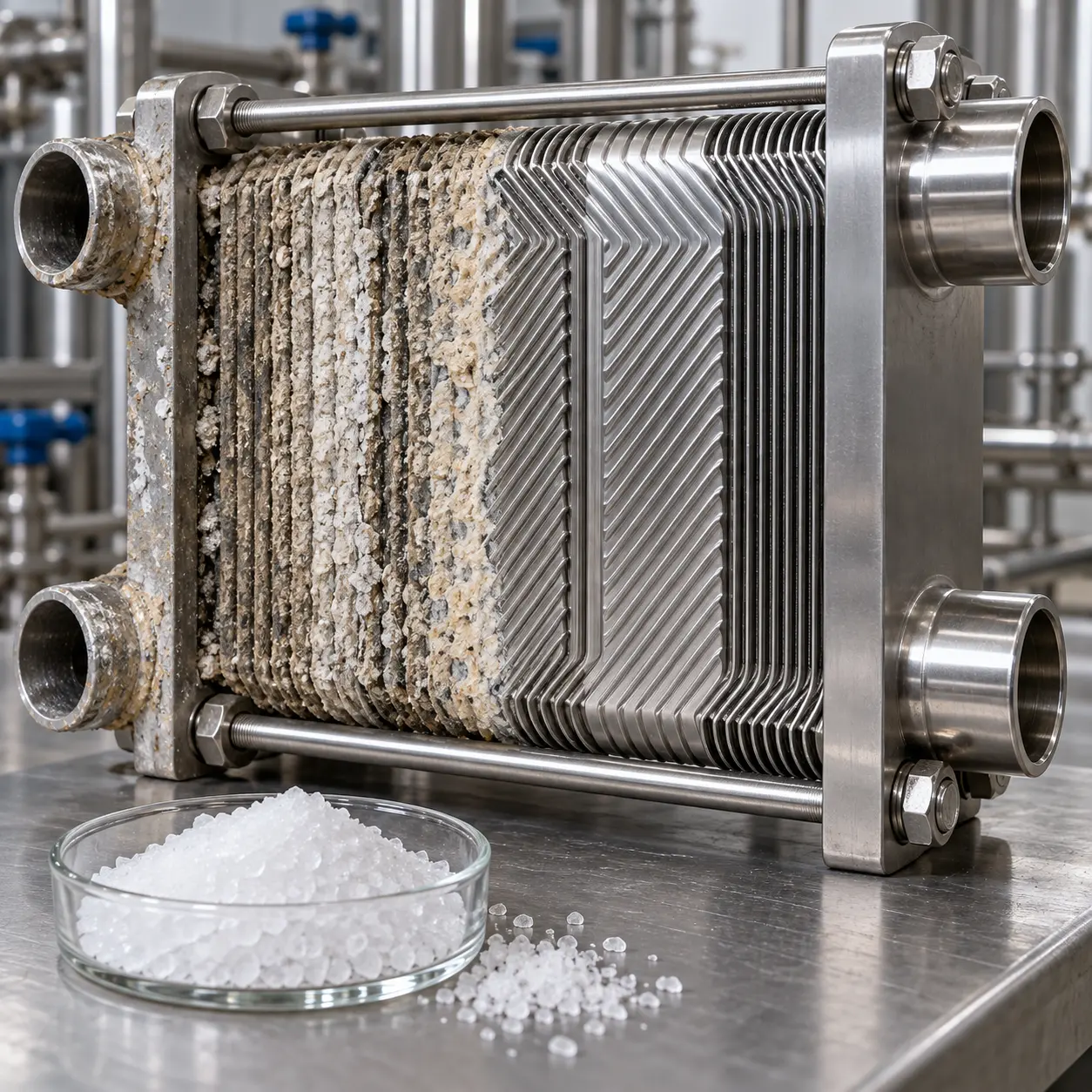
Citric acid vs vinegar for descaling is a practical comparison, not a contest between two familiar household products. Both are acids that can dissolve mineral deposits, but they differ in concentration control, odour, residue profile and suitability for repeatable cleaning. A removable kettle component and a plate heat exchanger should not be cleaned by the same rule of thumb. For a small permitted domestic task, vinegar can be convenient. For process equipment, scheduled maintenance or clean-in-place (CIP) work, a measured citric-acid solution is usually easier to prepare, document and rinse.
The correct choice begins with the deposit, the equipment material and the required level of control. This guide explains the chemistry behind limescale removal, where each option fits, and how to run a safer descaling cycle without damaging equipment or creating an incompatible cleaner mixture.
Citric acid vs vinegar for descaling: the short answer
Citric acid is normally the better operational choice when you need a consistent and repeatable descaling method. It is supplied as a dry solid, so teams can weigh it, prepare a known solution strength and record each cycle. It is also low odour when dissolved and citrate can help keep dissolved calcium in the wash liquid. Vinegar can remove light limescale, especially on small removable items, but the acetic-acid content varies by product and its persistent odour is often undesirable in technical or food-processing areas.
Neither option is automatically safe for every surface. Temperature, concentration, contact time, scale thickness, water hardness, equipment geometry, seals and manufacturer guidance all affect the result. “Natural” does not mean harmless to stone, metal coatings, elastomers or poorly rinsed equipment.
What limescale is and why acids dissolve it
Limescale is primarily calcium carbonate, sometimes mixed with magnesium salts, silica, iron residues or trapped organic soil. It forms when hard water is heated, evaporated or circulated repeatedly. A white crust on a fitting is an obvious sign, but the more expensive deposits are inside pipework, spray devices and heat exchangers, where they restrict flow and lower heat-transfer efficiency.
Acids supply hydrogen ions that react with calcium carbonate. The carbonate becomes carbon dioxide and water, while calcium moves into solution as a dissolved salt. Mild fizzing is therefore expected when fresh scale meets an acid. The reaction slows as accessible scale disappears, as solution strength is consumed, or when the deposit contains poorly soluble material. A clear-looking liquid alone is not proof of cleanliness; coverage, flow, inspection and rinsing are equally important.
Citric acid has three acidic groups and forms citrate ions that can bind calcium. That helps explain its common use in descaling systems: it can dissolve carbonate scale and assist in keeping calcium in the cleaning liquid. Its chemical properties are described in the PubChem record for citric acid. Acetic acid, the active acid in vinegar, has a different structure and is normally encountered as a pre-diluted liquid; see the PubChem record for acetic acid for its basic chemical data.
Practical comparison: citric acid and vinegar
| Decision factor | Citric acid solution | Household vinegar |
|---|---|---|
| Supply form | Dry crystals or powder mixed to a chosen concentration | Pre-diluted acetic-acid solution; strength varies by product |
| Dosing control | High: mass and water volume can be recorded | Lower: depends on the labelled acidity and any further dilution |
| Typical fit | Measured maintenance, circulation and industrial cleaning programs | Light scale on simple, permitted domestic items |
| Odour | Low persistent odour | Distinct acetic odour, especially when warm |
| Rinse management | Defined rinse endpoint can be set and documented | Still requires rinsing; remaining odour may signal poor rinsing |
The table is a decision aid, not a universal corrosion chart. A freshly mixed citric-acid solution may be more useful than weak vinegar, yet any acid can harm a sensitive surface if it is too concentrated, too hot or left too long. Select the chemistry after identifying both the scale and the material.
Why citric acid is easier to standardize
Citric acid is usually purchased as a stable, dry material. An operator can weigh the approved amount, add a known water volume and record the batch, temperature and circulation time. This is valuable because it makes one cleaning cycle comparable with the next. If a result is poor, a team can investigate flow, contact time, water quality or deposit composition instead of guessing what concentration was in an unlabelled liquid.
For an industrial cleaning program, start with the specification of the citric acid material used for industrial applications and set the procedure around the equipment’s guidance. The correct grade, purity documentation and storage approach should match the intended use. A food-compatible raw material does not by itself validate a cleaning cycle; the whole sequence, including rinsing, must be controlled.
Vinegar arrives ready to use, which makes it familiar but less precise. Different consumer vinegars can contain different levels of acetic acid, and coloured, flavoured or scented variants are a poor fit for technical cleaning. Further dilution lowers acidity. That uncertainty can be acceptable for a small one-off task, but it makes troubleshooting and trend analysis harder in a facility that needs repeatable outcomes.
Citric acid also offers a useful operational advantage after calcium carbonate begins to dissolve. Calcium-citrate interactions can reduce the tendency for dissolved calcium to immediately redeposit elsewhere in the wash liquid. This does not remove the need for adequate solution volume, agitation and disposal planning, but it makes citric acid a practical option for hard-water deposits without the strong smell associated with vinegar. For more background, read what citric acid is and how it is used.
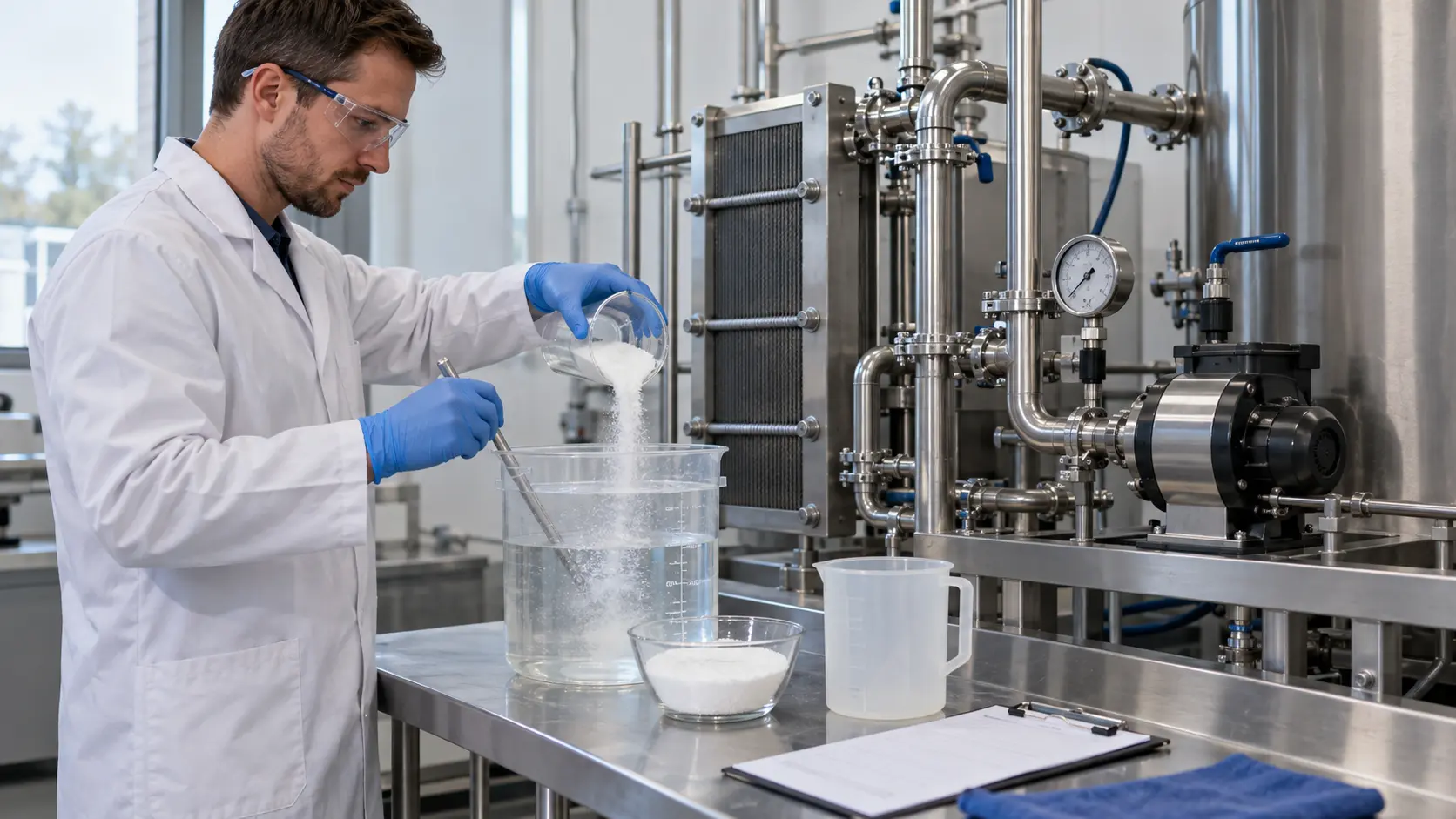
When vinegar is a reasonable choice
Vinegar is not ineffective. It can be useful for light scale on detachable domestic components when the manufacturer allows acidic cleaning. It is easy to apply to a soaked cloth or removable part and is readily available in small quantities. Its limitations are mainly operational: the exact acetic-acid concentration can vary, its odour can linger on plastics, and it is not ideal in enclosed workspaces or near product-handling areas.
Use plain vinegar only for an approved task. Do not treat it as a universal solution for coffee machines, steam appliances, aluminium parts, natural stone, plated fixtures or any device with a stated cleaning restriction. Some equipment manufacturers prohibit vinegar because of odour, residue or material concerns, even where it could remove some scale. Product instructions always take priority over general cleaning advice.
Identify the deposit before choosing a cleaner
Not every pale deposit is simple limescale. Calcium carbonate responds readily to mild acids, but silicate-rich scale, metal oxides, baked-on product and biofilm may need another approach. An acid wash might remove the carbonate layer while leaving organic soil underneath. In a controlled process, the correct sequence could involve an approved alkaline clean, water rinse and acid descale. Combining cleaners in one vessel is not a shortcut; it makes the chemistry unpredictable and can damage equipment.
Use operating data as well as visual evidence. Rising differential pressure, lower heat-transfer performance, longer heat-up times, uneven spray coverage or recurring deposits at one point can identify a system problem. Descaling can restore performance, but it will not permanently correct unsuitable water treatment, excessive temperature, poor drainage or a flow dead leg. The best maintenance plan links cleaning frequency to measured conditions instead of waiting for a visible failure.
Material compatibility comes before cleaning speed
Stainless steel is common in process equipment, but “stainless” is not a complete compatibility statement. Alloy grade, weld condition, temperature, chloride exposure, time and mechanical stress all affect corrosion risk. Mild citric-acid cleaning can be appropriate in many suitable stainless systems, yet the equipment supplier should define allowable concentration, temperature and exposure. Aluminium, zinc, galvanized surfaces, natural stone, cementitious materials and decorative finishes require special caution because acids may etch, dull or corrode them.
Stronger mineral acids may be selected for particular industrial deposits, but their higher handling and corrosion risks change the entire job. Comparing an acid such as nitric acid must never be taken as advice to substitute it for citric acid. The safety principles in this guide to handling nitric acid safely show why chemical selection, PPE, ventilation and written procedures must remain connected.
Before cleaning, obtain the equipment manual, inspect seals and gaskets, identify mixed-metal joints and confirm whether the system is open, recirculating or sealed. Where corrosion, contamination or downtime would be costly, conduct a controlled trial on an appropriate surface or seek guidance from the manufacturer and a qualified chemical professional. Never use the most valuable component as an experiment.
A controlled citric-acid descaling method
- Isolate and inspect. Shut down the equipment safely, cool it if required and record the deposit, operational symptoms and affected materials.
- Remove loose soil. Flush with water or complete the approved pre-cleaning stage. Acid acts more predictably when heavy soil is not shielding the scale.
- Prepare by weight. Add citric acid to water at the approved site concentration, using compatible vessels and PPE. Record the batch details.
- Apply or circulate. Stay within approved temperature, time and flow limits. Ensure the relevant wetted surfaces receive contact and avoid trapped pockets.
- Monitor the cycle. Observe flow, temperature and any approved pH or conductivity checks. Unexpected foaming, discolouration or leakage is a stop-and-investigate signal.
- Drain and rinse. Rinse until the defined endpoint is met. Food, beverage and pharmaceutical sites should use validated rinse criteria, not smell or appearance.
- Inspect and document. Check accessible surfaces and record the outcome so the next maintenance interval can be improved.
Warm water can speed up descaling, but heat also increases vapour exposure and material risk. Do not heat an acid solution unless the equipment procedure allows it. More acid and more temperature are not automatically better; a controlled cycle that protects equipment is more valuable than an aggressive one that removes scale once but shortens service life.
Using vinegar carefully on a small item
For a permitted household application, select plain vinegar rather than a scented, coloured or flavoured product. Apply it only to a removable component or to the part of the appliance that the manufacturer specifically permits to be descaled. Allow suitable contact time, then rinse thoroughly with clean water. Do not leave an acidic liquid overnight in unknown materials because visible scale remains. If a deposit persists after a sensible controlled attempt, identify the deposit or seek manufacturer advice instead of escalating at random.
Never combine vinegar or citric acid with bleach, chlorine-releasing products, ammonia-based cleaners or proprietary mixtures unless a written procedure authorizes the exact sequence. Acidifying chlorine-containing products can release hazardous gas. Keep chemicals labelled, do not store them in reused food containers and use ventilation, gloves and eye protection whenever splashing is possible.
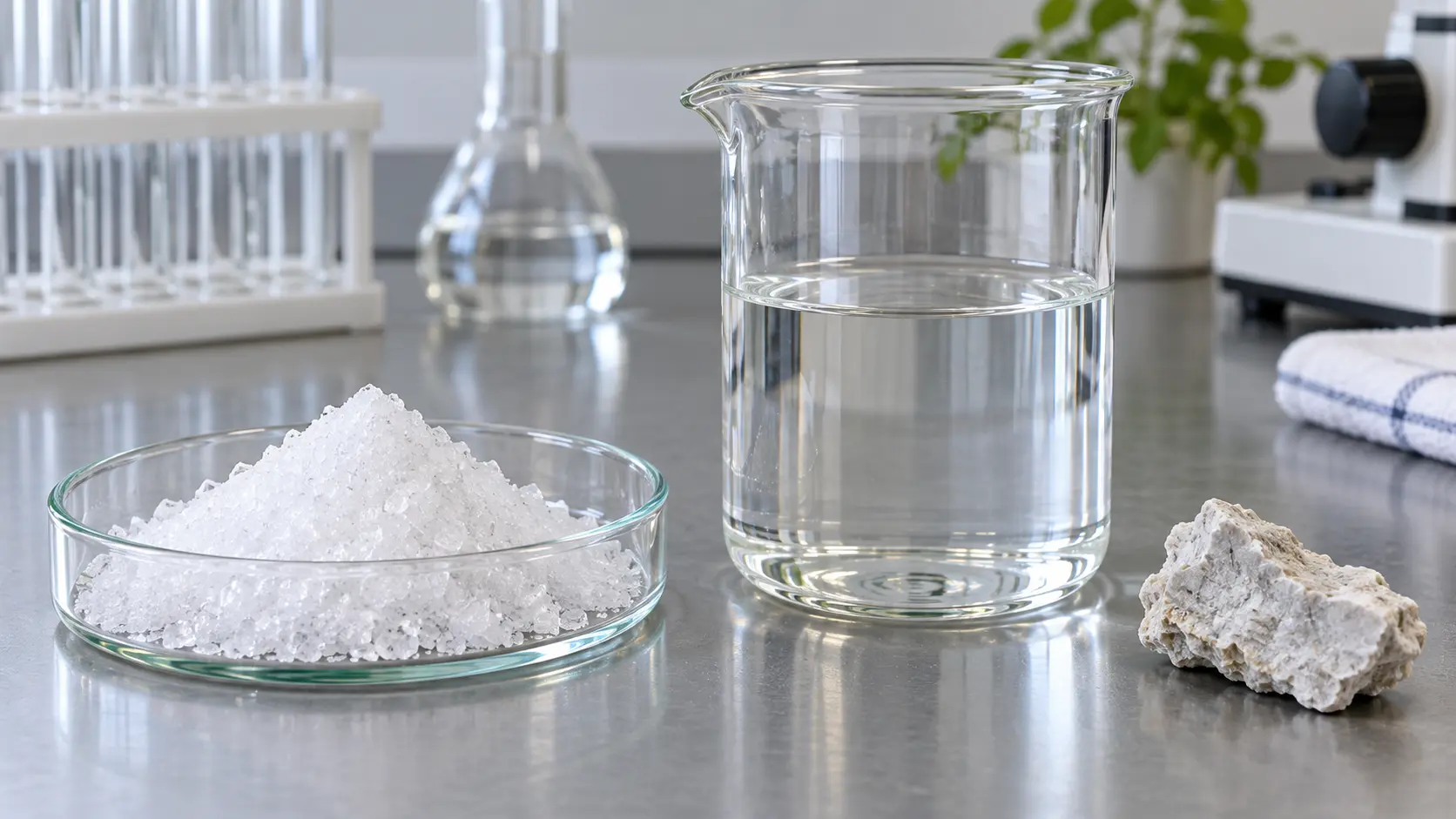
Descaling in food, beverage and CIP systems
In a production environment, a descaler is part of a complete system rather than an isolated ingredient. Teams should define chemical grade, water quality, concentration, circulation velocity, temperature, contact time, drain route and rinse acceptance criteria. The sequence must fit the next product run and the site’s quality-management program. A food-grade acid alone does not validate cleaning; validation depends on the full procedure and its records.
Citric acid is often attractive here because it can be supplied with a consistent specification and prepared to a documented concentration. Its low persistent odour is practical in enclosed plants, and the dry format can simplify inventory when several strengths are required. Procurement and maintenance teams should share the equipment material, scale type, water data and desired cleaning outcome when requesting technical support; a product name alone is not enough to select a cleaning cycle.
After an acid descale, consider whether an alkaline clean is needed for unrelated fats, proteins or biofilm. One acid cycle should not be expected to solve every soil problem. The distinction between solvent cleaning and mineral-scale cleaning matters: industrial uses of isopropyl alcohol show a solvent role, whereas citric acid is chosen for mineral deposits. Matching chemistry to soil prevents wasted time and unsafe combinations.
Cost, waste and maintenance planning
Purchase price tells only part of the story. A controlled citric-acid cycle can reduce uncertainty and make inventory planning easier. Conversely, using more chemistry than the procedure requires increases waste and cost without guaranteeing a better result.
Spent descaling liquid contains dissolved minerals and may contain other contaminants from the system. Disposal must meet local rules and site wastewater limits. Assess pH, conductivity, metals and product residues where required. Both citric acid and vinegar are often viewed as gentler than strong mineral acids, but this perception should never replace a facility-specific environmental assessment.
Summary: when to choose each option
Choose a measured citric-acid solution when you need repeatable strength, low odour, documented maintenance, controlled circulation or defined rinse requirements. Choose vinegar only for a simple, permitted, small-scale task where its known limitations are acceptable. Choose neither until the deposit is understood if the scale is unusual, mixed with organic soil or located in critical equipment.
For a focused explanation of carbonate removal, see the guide to citric acid and limescale removal. Reliable descaling comes from identifying the deposit, checking material compatibility, using a measured method and verifying the rinse. That is what turns the choice between citric acid and vinegar into a technical decision rather than a guess.
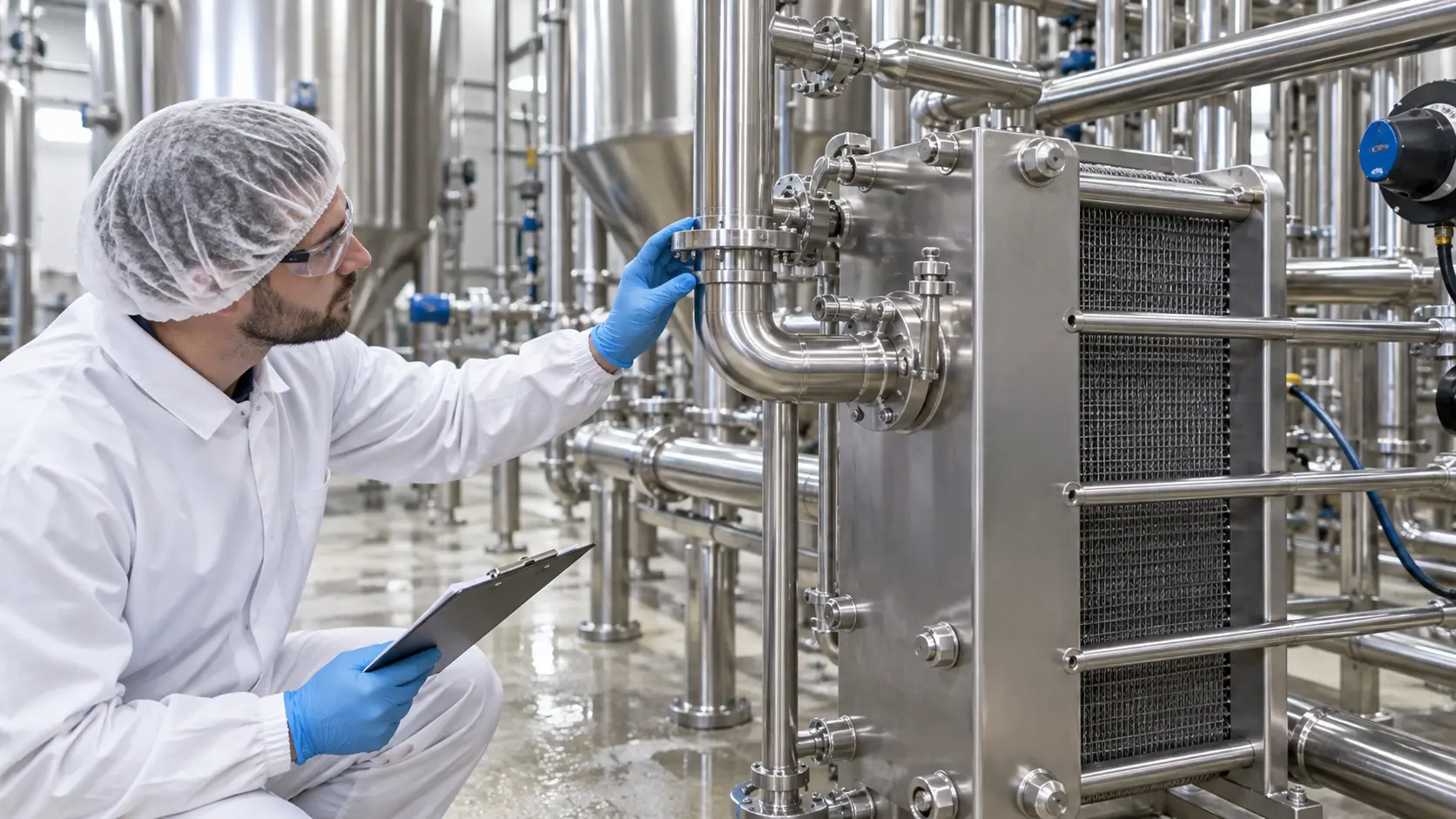
Conclusion
For controlled descaling, citric acid offers the clearer route to a repeatable, low-odour and well-documented method. Vinegar remains useful for a permitted small task, but it is less convenient to standardize and is rarely the first choice for industrial or CIP maintenance. Start with the deposit, protect the materials, use a measured procedure and verify the rinse. This approach reduces avoidable downtime and supports better equipment life.
Frequently asked questions
1. Is citric acid stronger than vinegar for descaling?
Not at every formulation or concentration, but citric acid is easier to dose accurately and use in a repeatable process. The result depends on solution strength, temperature, contact time, scale composition and the equipment surface.
2. Can I mix citric acid and vinegar for a better descaler?
No. Mixing them makes concentration control harder without creating a reliable new cleaning advantage. Use one approved chemistry at a known strength and keep it separate from other cleaners.
3. Will citric acid damage stainless steel?
It can be suitable for many systems within approved conditions, but compatibility depends on alloy, temperature, time, chloride exposure, welds and seals. Follow the equipment manufacturer’s procedure for critical systems.
4. How often should equipment be descaled?
Set the interval from water hardness, temperature, throughput, pressure-drop trends, heat-transfer data and inspection findings. Condition data is more useful than waiting for a visible failure.
5. Is a food-grade acid automatically safe for food equipment?
No. The complete process needs an approved concentration, compatible equipment, adequate rinsing, records and validation consistent with the site’s quality procedure.