


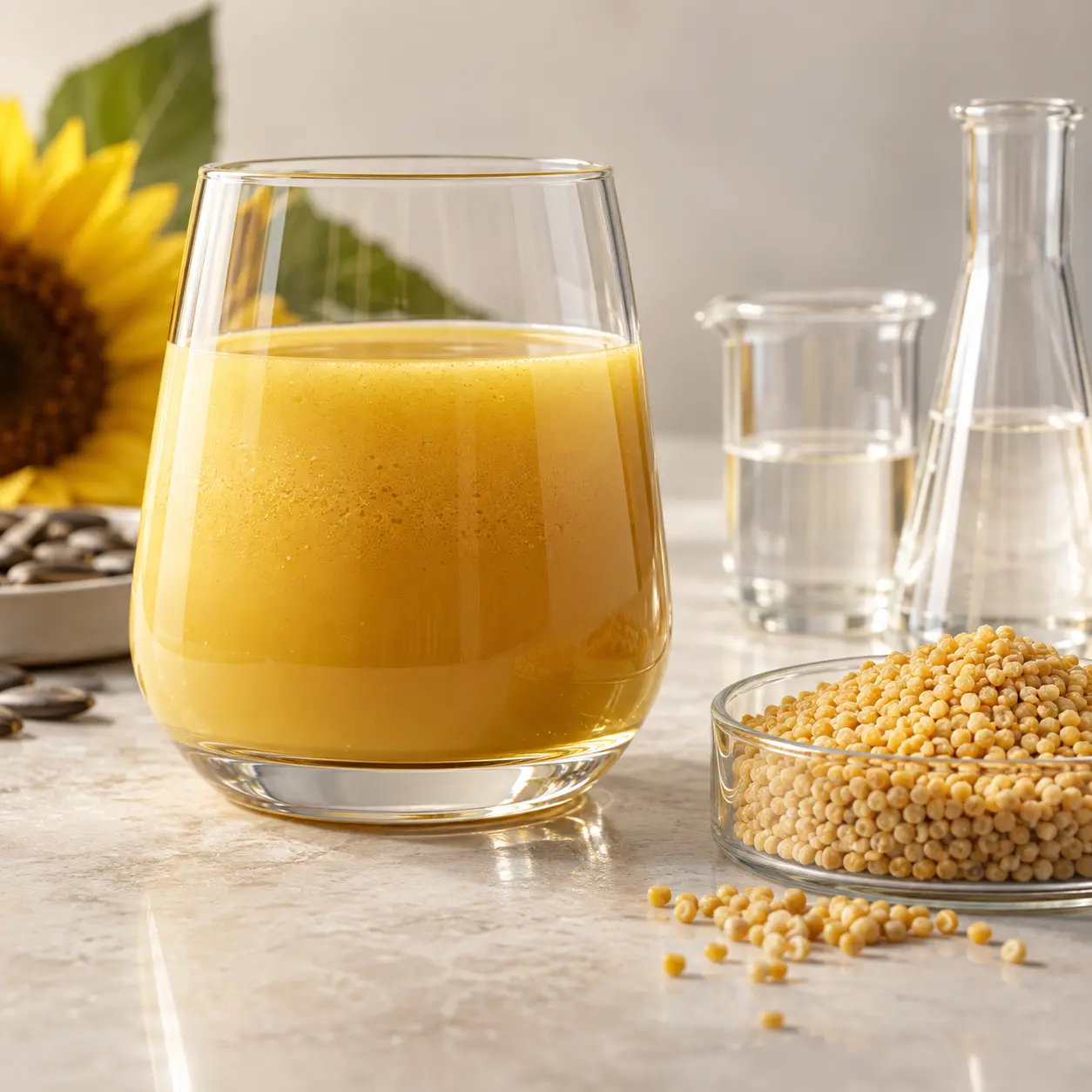
Natural food emulsifiers are ingredients derived from biological sources that help oil, water, fats, proteins, and other components remain more evenly dispersed in a food system. Common examples include lecithin, egg-yolk phospholipids, milk proteins, certain plant proteins, and selected hydrocolloids that support emulsion stability. Their performance depends on the food matrix, processing conditions, dosage, pH, temperature, and the regulatory status of the specific ingredient and grade.
Natural food emulsifiers are increasingly evaluated by manufacturers that want to improve texture, stability, ingredient dispersion, and processing while keeping formulation choices aligned with product positioning. The term “natural,” however, does not describe a single technical class. Different natural food emulsifiers work through different mechanisms, and an ingredient that performs well in chocolate may be unsuitable for a beverage, dressing, dairy alternative, or bakery filling.
For that reason, selecting natural food emulsifiers should begin with the structure of the finished food rather than with a preferred label claim. A manufacturer should define the continuous phase, dispersed phase, target texture, processing temperature, mixing energy, storage conditions, and destination-market requirements before comparing candidates. Natural food emulsifiers can then be screened under realistic production conditions instead of being selected only because they come from plant, animal, or fermentation-derived sources.
What makes a food emulsifier “natural” in manufacturing?
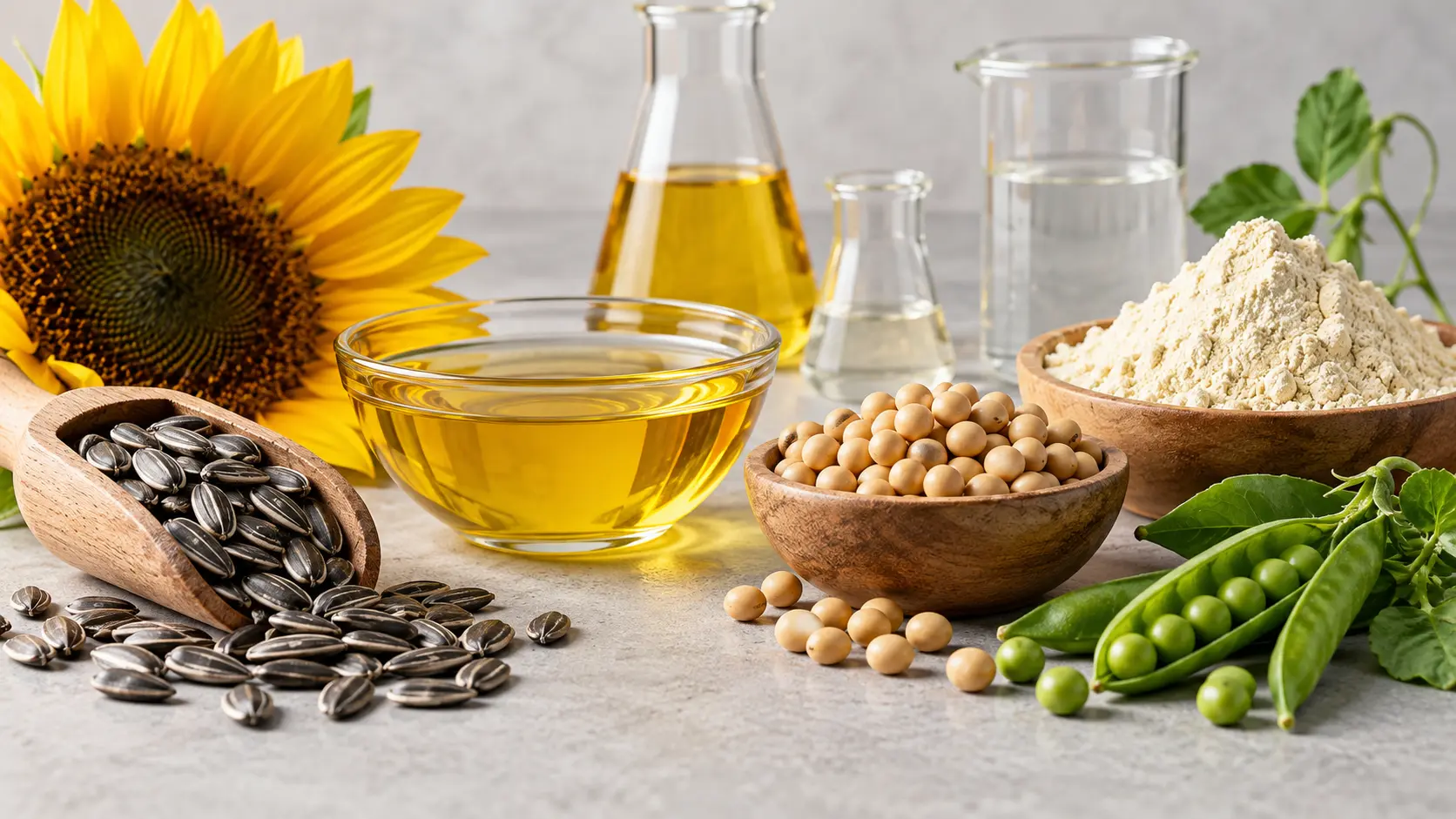
In practical formulation work, “natural” usually refers to the origin or processing history of an ingredient rather than to a universal legal category that automatically applies across all markets. Lecithin may be derived from soy or sunflower. Proteins may come from dairy, egg, pea, or other food sources. Some hydrocolloids are obtained from plants, seaweeds, or microbial fermentation. Each ingredient can contribute to emulsion formation or stability in a different way.
The important technical question is whether the ingredient can interact with the relevant phases in the formulation. True emulsifiers are surface-active: they can position themselves at the interface between oil and water and reduce the tendency of droplets to merge. Other naturally derived ingredients may not be primary emulsifiers but can still improve stability by increasing viscosity, forming interfacial layers, binding water, or creating a supporting network around dispersed droplets.
Manufacturers should therefore separate three questions: where the ingredient comes from, what function it performs in the formula, and whether that use is permitted for the intended food category and market.
| Natural emulsifier type | Typical source | Main formulation role | Common considerations |
|---|---|---|---|
| Lecithin | Soy, sunflower and other oilseeds | Emulsification, wetting, dispersion | Source, allergen/GMO requirements, phospholipid profile, physical form |
| Egg-yolk phospholipids | Egg yolk | Strong oil-in-water emulsification | Allergen declaration, flavour, microbiological control, product positioning |
| Milk proteins | Milk | Interfacial stabilisation and texture | pH sensitivity, heat treatment, dairy allergen requirements |
| Plant proteins | Pea, soy and other plant materials | Emulsification and interfacial film formation | Solubility, flavour, pH, heat history, protein concentration |
| Hydrocolloids | Plants, seaweeds or fermentation | Viscosity and emulsion-supporting stability | Hydration, shear, texture, interaction with proteins and salts |
Lecithin is one of the most versatile natural food emulsifiers
Lecithin is widely used because its phospholipid-rich composition gives it both water-compatible and oil-compatible character. That makes it useful in formulations where wetting, dispersion, viscosity management, or emulsion support is needed. Commercial lecithin is commonly associated with soy and sunflower sources and may be supplied in liquid, powdered, de-oiled, or modified forms.
Its functionality varies by source and grade, so manufacturers should not treat every lecithin as interchangeable. Chocolate processing may prioritise viscosity and flow behaviour, while an instant powder may need improved wetting and dispersibility. A bakery formulation may focus on fat distribution and dough handling. In each case, the selected grade should be tested in the actual process.
For product-specific background, Silvari Group’s lecithin supply page explains common commercial forms, sourcing considerations, documentation, and food applications. Manufacturers comparing several emulsifier families can also review the separate guide on emulsifier and stabiliser roles in food manufacturing before running application trials.

Egg yolk remains a highly effective traditional emulsifier
Egg yolk contains phospholipids and proteins that can form and stabilise emulsions, which is why it has a long history in mayonnaise, dressings, sauces, and culinary systems. In suitable formulations, egg components can produce a creamy structure and strong sensory profile without relying on a separate purified emulsifier.
The trade-off is that egg introduces formulation and operational requirements. Allergen management is essential. Flavour and colour may affect products that are intended to be neutral. Microbiological controls, storage, supply consistency, and heat treatment must also match the manufacturing process. Egg yolk can therefore be an excellent technical solution, but it is not automatically the simplest solution for every industrial application.
Milk and plant proteins can stabilise food emulsions
Proteins can adsorb at oil-water interfaces and form protective films around droplets. Dairy proteins are widely used in beverages, nutritional products, desserts, and other emulsified systems. Plant proteins are increasingly considered in products designed around plant-based or dairy-free positioning.
Protein performance is highly sensitive to formulation conditions. pH can change protein charge and solubility. Heat treatment can unfold proteins or promote aggregation. Salts and minerals can alter interactions between droplets. A protein that works in a neutral beverage may become unstable near its isoelectric region or after an aggressive thermal process.
For that reason, formulators should evaluate the full process rather than judging a protein emulsifier immediately after mixing. When pH adjustment is part of the process, the procurement profile for a food-grade citric acid supply should be considered separately from emulsifier selection. Stability trials should include the intended pH, heat treatment, filling process, storage temperature, and shelf-life period. Sensory checks are also important because some plant proteins can contribute flavour, colour, or mouthfeel that changes the finished product.
Hydrocolloids often support emulsifiers rather than replace them
Gums and other hydrocolloids are frequently discussed alongside natural food emulsifiers because they can reduce creaming, improve suspension, and build viscosity. Their main action, however, may occur in the continuous phase rather than directly at the oil-water interface. In many products, the most effective system combines an interfacial emulsifier with a hydrocolloid that slows droplet movement.
This distinction matters during troubleshooting. If droplets are merging, the formula may need stronger interfacial protection. If droplets are individually stable but rise or settle too quickly, the continuous phase may need additional structure. Adding more of the wrong ingredient can produce excessive thickness without solving the underlying instability.
Natural versus conventional emulsifiers is a formulation decision, not a simple ranking
Natural-origin ingredients can support clean-label or source-specific product strategies, but conventional food emulsifiers may offer tighter functional control in some manufacturing systems. Mono- and diglycerides, for example, are widely used as emulsifiers and texture modifiers in processed foods. Their suitability depends on the specific grade, intended food category, and regulatory conditions.
Where shelf-life preservation also matters, procurement teams may separately review Silvari Group’s potassium sorbate supply page. Preservatives and emulsifiers solve different technical problems, so each should be specified and tested for its own role in the formula.
A useful development process does not ask whether natural or conventional emulsifiers are universally better. It asks which system meets the product brief with the fewest technical compromises while remaining compliant in the target market.
How to choose a natural food emulsifier for a commercial formulation
Begin by defining the physical problem. Is the product separating into visible oil and water layers? Is there creaming, sedimentation, poor wetting, unstable foam, excessive viscosity, or texture drift during storage? Each failure points toward a different formulation strategy.
1. Define the emulsion type and target structure
Determine whether the system is oil-in-water, water-in-oil, or a more complex multiphase product. Record the required viscosity, droplet size, sensory profile, and appearance. The emulsifier must be selected for the structure you actually need to create.
2. Match the ingredient to the process
Check how the emulsifier should be dispersed and hydrated, the recommended addition order, and the temperature range in which it performs well. Homogenisation pressure, shear rate, holding time, and cooling conditions can all change the result.
3. Test pH, minerals, sugars and proteins together
Food matrices are interactive systems. A successful emulsifier test in water and oil alone may fail once acids, salts, proteins, sweeteners, flavours, or stabilisers are added. Bench trials should therefore become progressively more representative of the final recipe.
4. Include shelf-life stresses in development
Freshly produced samples may look stable even when they are likely to fail later. Evaluate the formula after heat treatment, cooling, transport simulation, temperature cycling, and the expected storage period. Depending on the product, freeze-thaw testing or accelerated stability work may also be useful.
5. Verify food-grade documentation and legal conditions of use
Ingredient origin does not replace regulatory review. Manufacturers should confirm identity, specification, purity, allergen status, GMO status where relevant, microbiological criteria, certificates, permitted uses, and any maximum levels that apply in the target market. Silvari Group’s overview of what “food grade” means provides useful background for procurement and quality teams working with functional food ingredients.
Key manufacturing applications for natural food emulsifiers
In bakery and confectionery, emulsifiers can influence fat distribution, dough handling, crumb structure, chocolate flow, and ingredient dispersion. In sauces and dressings, they help keep oil droplets distributed through a continuous water phase. In beverages, emulsifier selection may be linked to flavour-oil dispersion, cloud stability, protein interactions, and thermal processing.
In dairy and plant-based alternatives, the emulsifier often works alongside proteins and hydrocolloids. In instant powders, wetting and dispersibility can be as important as classic emulsion stability. The right ingredient is therefore application-specific: a solution that performs well in a dressing should not be assumed to work in chocolate, a nutritional drink, or a powdered premix.
Regulatory checks are part of emulsifier selection
Food-additive rules depend on the market in which the finished product is sold. In the European Union, authorised additives and their conditions of use are governed through EFSA’s food-additives overview, including Regulation (EC) No 1333/2008 and the Union lists. The European Commission notes that authorised additives are evaluated for safety, technological need, and appropriate use conditions.
In the United States, manufacturers must also verify the regulatory status and intended technical effect of substances added to food. the EU food-additives regulation sets the framework for authorised additives as ingredients used to support smooth mixing, prevent separation, control crystallisation, keep ingredients dispersed, and improve dissolution in suitable foods. FDA’s food-substance inventory also identifies lecithin for several technical effects, including emulsifier and surface-active functions.
These references should be used as starting points for regulatory review, not as substitutes for product-specific compliance assessment. The exact ingredient identity, grade, food category, dosage, labelling requirements, and destination market still need to be checked before commercial production.
Common mistakes when switching to natural food emulsifiers
One common mistake is replacing an existing emulsifier on a one-to-one weight basis without re-optimising the process. Different emulsifiers have different interfacial behaviour, effective concentration ranges, and dispersion requirements. Another mistake is focusing only on immediate appearance. A formulation that looks smooth after homogenisation can still fail during storage.
Manufacturers may also overuse stabilisers to compensate for weak emulsification. This can make a product unnecessarily thick while leaving the droplet interface inadequately protected. Finally, the word “natural” should not be treated as a universal regulatory claim. Marketing language, ingredient naming, and label claims should be reviewed for the specific jurisdiction.
Conclusion
Natural food emulsifiers can give manufacturers flexible options for building stable, appealing, and processable foods, but successful selection depends on the complete formulation. Lecithin, egg-yolk components, dairy proteins, plant proteins, and supporting hydrocolloids all behave differently. Start with the emulsion structure and process conditions, compare candidates in representative trials, and confirm the applicable regulatory and documentation requirements before scale-up.
For manufacturers evaluating lecithin or related food-emulsifier systems, a technical supplier discussion is most useful when it includes the intended application, oil and water phases, pH, processing temperature, shear conditions, target market, and required certifications. This makes it easier to shortlist grades for meaningful formulation testing rather than selecting an ingredient by name alone.
Frequently Asked Questions
1.What are the most common natural food emulsifiers?
Lecithin, egg-yolk phospholipids, dairy proteins, and selected plant proteins are common examples. Hydrocolloids may also support emulsion stability, although many function mainly by changing the continuous phase rather than acting as primary interfacial emulsifiers.
2.Is sunflower lecithin a natural food emulsifier?
Sunflower lecithin is a plant-derived phospholipid ingredient commonly used for emulsification, dispersion, and wetting. The suitability of a particular grade depends on its specification, physical form, formulation, and destination-market requirements.
3.Can natural food emulsifiers replace mono- and diglycerides?
Sometimes, but not automatically. Replacement requires formulation and process testing because different emulsifiers can produce different effects on stability, viscosity, texture, crystallisation, and shelf life.
4.Do natural emulsifiers always create a clean-label product?
No. Clean-label positioning depends on the finished formulation, ingredient declaration, processing, market expectations, and local rules. Natural origin alone does not guarantee that a particular claim is appropriate.
5.How should manufacturers test a natural emulsifier?
Use a controlled baseline and test dosage, order of addition, mixing or homogenisation, pH, heat treatment, storage conditions, and sensory effects. The final decision should be based on process-representative and shelf-life-relevant trials.