


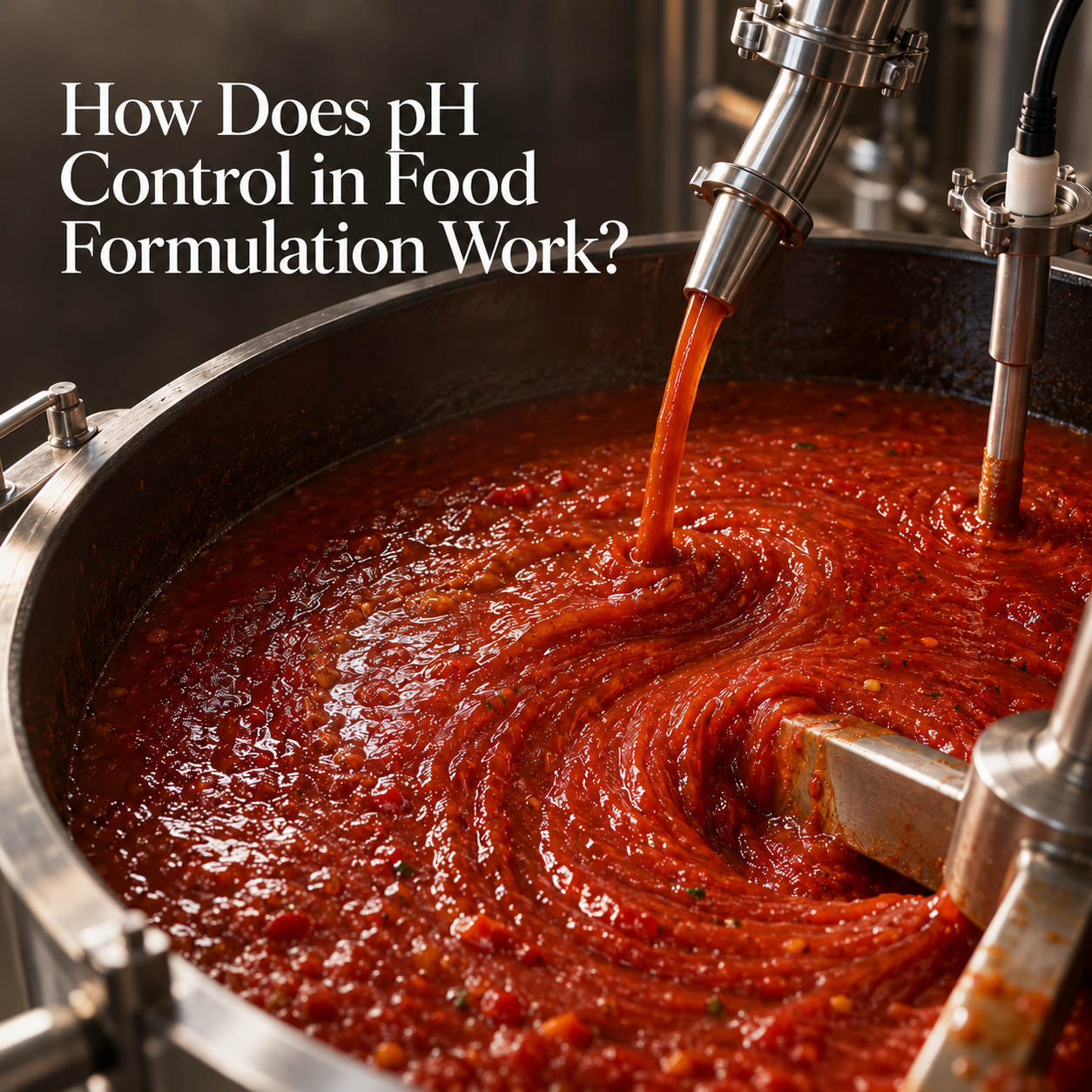
pH control in food formulation means setting and maintaining a product’s acidity within a validated range so its flavor, texture, colour, processing behaviour and intended preservation system remain consistent. Formulators select compatible ingredients, add acid or alkali in measured steps, mix thoroughly, allow the product to equilibrate, and verify pH with a calibrated meter. There is no single target pH for every food, and pH alone does not establish safety or shelf life.
pH control in food formulation is the practical process of steering acidity to a product specification and keeping it there across batches. The number on a meter can affect far more than sourness: it can change protein behaviour, pigment colour, preservative performance and the way a food responds to heat or storage. A successful formulation therefore treats pH as a measurable process variable, not as a flavour adjustment made at the end.
This guide explains how pH control in food formulation works, why pH and total acidity are different, how to choose an adjustment strategy, and how to check that the finished food is uniform. The correct target depends on the product, ingredients, process, packaging, market and applicable rules; a number copied from another recipe is not a substitute for validation.
In day-to-day production, pH management turns a formulation target into a repeatable operating window. The specification should explain what is measured, when it is measured and what action follows a deviation.
A repeatable acidity-management program starts with a specification. Reliable ingredient sourcing is also important, particularly for manufacturers involved in trading in Europe, where product specifications and regulatory requirements must be considered.
What pH tells a food formulator
pH describes the intensity of acidity in an aqueous system on a logarithmic scale. A one-unit change represents a tenfold change in hydrogen-ion activity, so small numerical shifts can produce noticeable effects. In pH control in food formulation, the meter reading is useful because it provides a repeatable point of comparison between a design target, pilot batch and production record.
However, pH is not the same as the total quantity of acid in a food. Two sauces can have the same pH but taste differently sour and require different amounts of alkali to reach a chosen endpoint. That difference often reflects buffering capacity: proteins, mineral salts, phosphates and other ingredients resist pH change. A strongly buffered formulation may need more acid to move a small number of pH units than a lightly buffered beverage.
That distinction is central to the measurement approach because dose and endpoint are related, but they are not interchangeable measurements.
This makes good acidity control easier to audit.
| Measure | What it describes | Why it matters in formulation |
|---|---|---|
| pH | Intensity of acidity at the time and conditions of measurement | Helps check a defined product specification and process control point |
| Titratable acidity | Amount of base needed to neutralize acids to a stated endpoint | Can relate more closely to total acid reserve and perceived tartness |
| Buffering capacity | Resistance of the food to a pH shift | Helps predict the quantity and repeatability of an adjustment |
Why pH control in food formulation matters
Flavour and balance
Acidity can brighten fruit notes, balance sweetness, temper richness or make a product taste sharp. The same pH can produce different sensory results because sugars, salts, aroma compounds, temperature and acid type all contribute. Sensory panels should evaluate samples alongside instrumental readings, using a controlled tasting protocol and the intended serving conditions.
Good pilot testing therefore pairs instrumental data with a defined sensory objective.
Pilot work gives the colour specification a factual baseline.
Colour and appearance
Some natural pigments respond strongly to pH. Anthocyanins in berries and purple vegetables, for example, can shift hue as acidity changes. A beverage may therefore look different even when its ingredient list and colour dose are unchanged. Prototype work should record colour at the target pH and after relevant processing and storage, rather than assuming that an immediate bench sample predicts the packaged product.
When colour is a selling cue, acid adjustment should include both fresh and stored samples.
Texture and protein behaviour
Protein charge and solubility vary with pH. In dairy systems, acidification can encourage casein aggregation and gel formation; in other products, a pH shift may reduce solubility, change viscosity or promote separation. Pectin gels, starches and hydrocolloids also respond to the surrounding formulation. The useful question is not whether lower pH is always better, but whether the selected pH supports the structure the product needs after mixing, heating, cooling and storage.
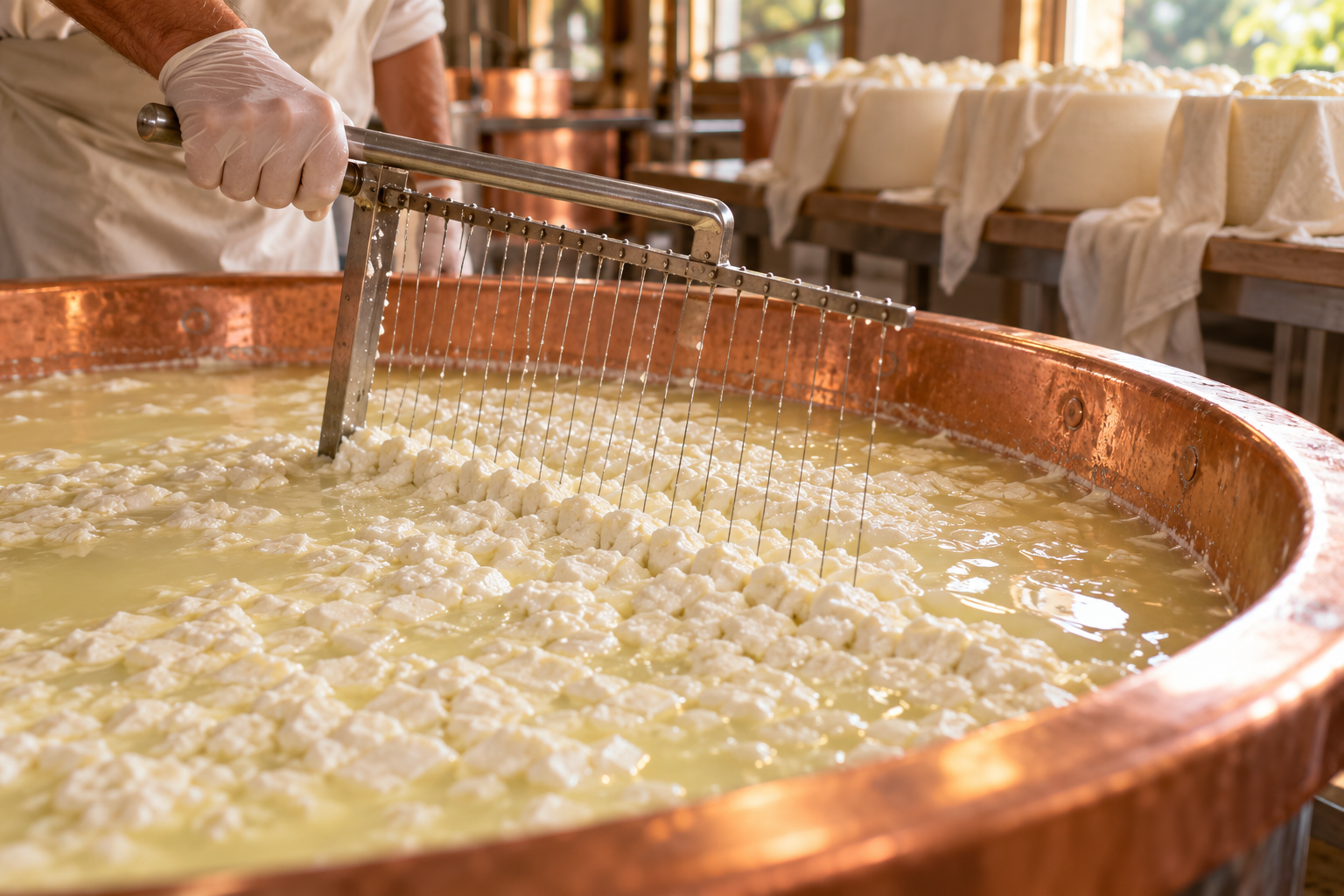
For a chosen pH target, texture needs to be checked after the complete process, not only in the mixing vessel.
Mixing design also governs the preservation plan.
Preservative performance and safety design
For some weak-acid preservatives, the balance between ionized and undissociated forms changes with pH, which can influence antimicrobial performance. A pH target must still be considered with the permitted use level, food category, process, packaging and validated shelf-life plan. If a formulation uses sorbate, review the applicable product specification and potassium sorbate supply and grade documentation as part of ingredient qualification.
Acidity management is one part of a food-safety system; it is not a stand-alone kill step. Water activity, heat treatment, salt, refrigeration, package integrity, contamination control and storage conditions may also matter. A recipe reaching a low pH does not automatically become shelf-stable.
A robust process plan documents the other hurdles that make the intended product safe and stable.
Equilibrium timing is part of the pH workflow.
A practical pH control workflow for new products
- Define the product requirement. Set a justified pH range for the actual product and process. Connect it to the desired sensory, texture, colour, manufacturing and regulatory outcomes. In pH control in food formulation, the range should include a realistic tolerance, not just a single ideal laboratory number.
- Map the formulation. List ingredients, their proportions, water contribution, order of addition and likely buffering components. Review the role of each acidulant, base, salt and preservative. When citric acid is under consideration, compare its grade and intended use with the application; the site’s industrial citric acid supply information is a starting point for supplier and specification review, not a substitute for confirming food-grade suitability.
- Run small, controlled trials. Make a baseline sample and several measured variations. Change one factor at a time where practical, record ingredient weights, mixing conditions, temperature, pH and sensory results. Small aliquot trials help estimate demand before adjusting a large batch, but final confirmation should use the complete formula and process.
- Add the adjustment gradually. Prepare a suitable food-grade acid or alkali solution when appropriate, add it in a controlled amount, and provide enough mixing to distribute it. Direct addition can create local low-pH zones, uneven flavour or protein damage. Scale-up should account for dosing accuracy, mixing time and batch geometry.
- Allow the system to settle. Measure after mixing and after any required holding or equilibration period. Solid pieces, emulsions, gels and buffered foods may not reach a uniform reading immediately. The method must account for the product’s physical form and the time required for acid to reach all components.
- Measure representative samples. Sample from appropriate locations or units, use a suitable electrode, and follow a written method for temperature, preparation, rinse and stabilization. A composite result can hide variation, so the sampling plan should be designed around the product and risk.
- Confirm performance through storage and production. Evaluate the actual packaged food under relevant time and temperature conditions. Define in-process checks, finished-product limits, recordkeeping and corrective actions before routine production begins.
A written method anchors this workflow.
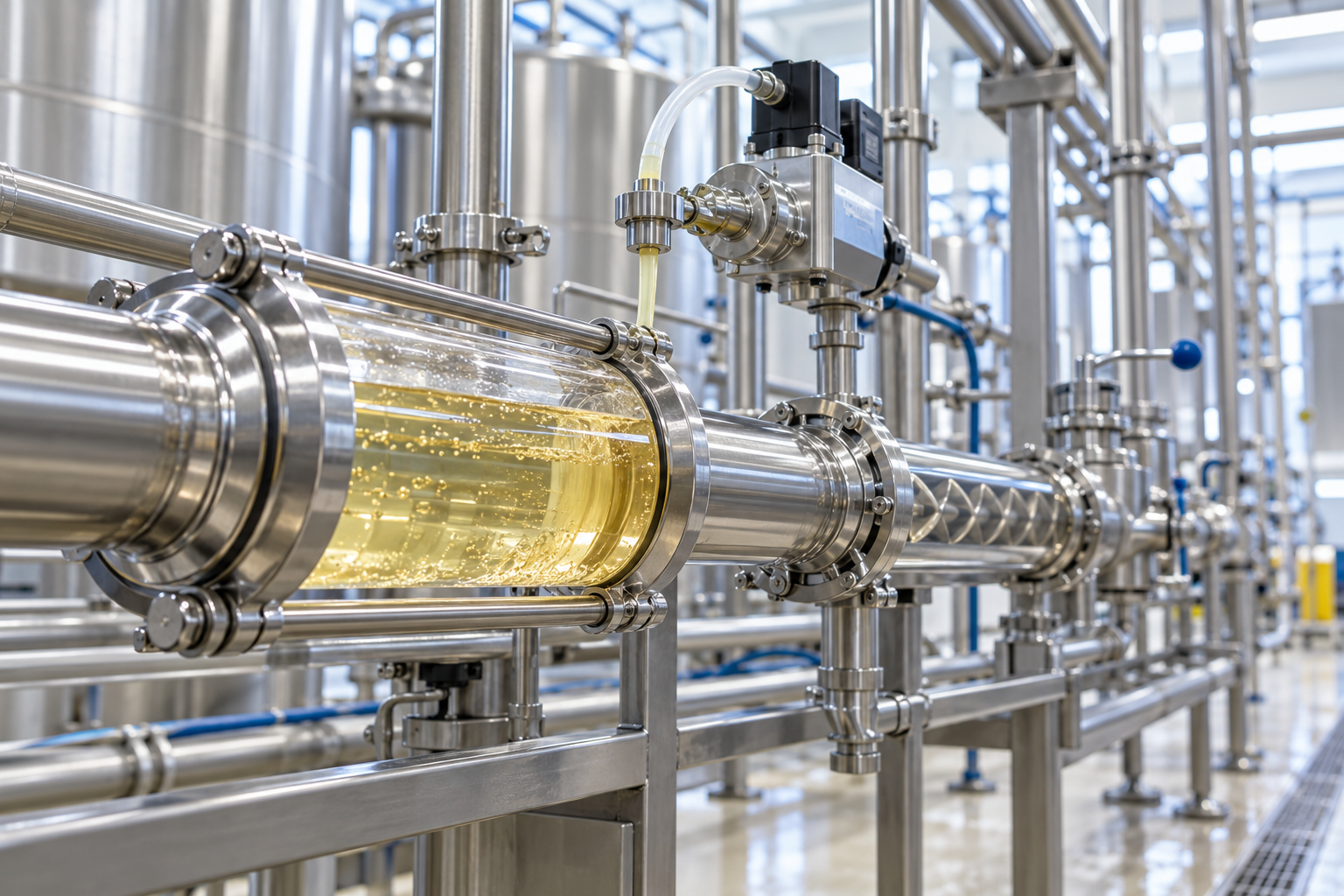
In scale-up, accurate dosing and mixing depend on equipment performance as much as on ingredient selection.
How to measure pH consistently
A calibrated pH meter is generally more useful than indicator strips when a formulation depends on a tight numerical limit or contains opaque, coloured or semi-solid ingredients. Select an electrode made for the sample type; viscous, oily, protein-rich and particulate foods can foul or slow a general-purpose probe. Clean and store the electrode according to its manufacturer’s instructions.
Electrode choice can affect the consistency of pH readings.
For repeatable pH control in food formulation, standardize the measurement method: identify the sample point, portion size, sample preparation, measurement temperature, buffer set, calibration frequency, stabilization criterion and record format. Calibrate with suitable fresh buffers that bracket the expected sample pH. Rinse between samples, avoid wiping a glass bulb in a way that creates static, and verify performance when readings drift or disagree with process history.
Temperature matters because both the sample and buffer pH can vary with temperature. Automatic temperature compensation adjusts electrode response; it does not convert every food’s chemical equilibrium to a common reference temperature. Measure samples at the method’s stated condition and document it. For semi-solids or foods with solid and liquid phases, follow a validated sample-preparation procedure rather than measuring only the surrounding liquid.
Do not rely on a single reading when the product is heterogeneous. Take replicate measurements from representative portions, confirm that values agree within the method’s tolerance, and investigate unexpected spread. A result should be interpreted with the method, sample condition and batch record, not as an isolated decimal.
Consistent sampling is essential because an accurate meter cannot correct a misleading sample.
These records strengthen process control between shifts.
Keep pH targets separate from regulatory limits
There is no universal pH target for food formulation. The target must fit the specific food and its manufacturing and storage conditions. In the United States, FDA defines an acidified food as a low-acid food to which acid or acid foods are added, with a finished equilibrium pH of 4.6 or below and water activity above 0.85. That definition applies to a particular regulatory category; it does not mean every food should be adjusted to pH 4.6, nor does it by itself establish that a product is safe.
Regulatory awareness supports pH control in food formulation, but the product’s legal classification must be verified rather than inferred from its reading alone.
Every operating limit needs a defined measurement method.
For products that may fall under acidified-food rules, confirm the classification, scheduled process, equilibration, testing and filing obligations with qualified food-safety and process authorities. The FDA acidified and low-acid canned foods guidance outlines the regulatory resources and requirements. Codex practice also emphasizes frequent measurement, records, process control and time for equilibrium and buffering effects; see its Code of Practice for acidified low-acid canned foods. Requirements vary by jurisdiction and product type.
Common problems and how to troubleshoot them
- The pH keeps drifting. Check whether the product has equilibrated, whether solids are fully hydrated or dispersed, and whether fermentation continues. Review ingredient lots, temperature and hold time before increasing acid blindly.
- The same acid dose gives different readings. Compare raw-material variability, water quality, mixing, sample location, meter calibration and temperature. Buffering ingredients can make batches respond differently even when the dose is identical.
- The pH is correct but flavour is wrong. Assess titratable acidity, acid type, sweetness, salt and aroma balance. A pH reading cannot predict the full sensory profile.
- Texture changes after acid addition. Test order of addition, dilution, local concentration and shear. Some proteins are sensitive to abrupt shifts; controlled dosing and mixing may reduce defects.
- The final package differs from the tank sample. Review fill variation, solid-to-liquid ratio, acid distribution, closure integrity and equilibrium time. Finished-product checks should reflect the package and process, not only the bulk tank.
A well-designed sampling plan supports reliable batch decisions.
When a formula depends on citric acid, a documented grade and lot specification supports repeatability; see the broader citric acid product and application overview. If the formulation also uses sulphite-based ingredients, check the intended food category, declared use and material specification for sodium metabisulfite supply rather than treating pH adjustment as a substitute for compliance review.
Recording supplier grade, lot and dosing conditions makes the same formulation easier to reproduce between production days.
A product-specific protocol should define target limits, sampling points and actions for deviations.
Corrective actions help stop process drift.
Summary and Conclusion
Set a product-specific target, adjust gradually, measure representative samples and validate the finished process under relevant storage conditions.
Reliable pH control in food formulation begins with a product-specific target, continues through controlled dosing and representative measurement, and ends with process and storage validation. pH should be interpreted alongside buffering capacity, titratable acidity, sensory quality, texture, colour and the full preservation system. A calibrated meter and careful records make the number useful; a validated process makes the product dependable.
In short, a validated routine is a designed process: specify, dose, mix, measure, record and validate.
Frequently Asked Questions
1. What does pH control in food formulation mean?
It means adjusting and monitoring a food’s acidity to meet a justified specification for product quality and process performance, then verifying the result in representative samples.
2. Is a lower pH always better for food preservation?
No. The suitable target depends on the product, process, packaging and applicable rules. pH alone does not guarantee safety or shelf stability.
3. Why can two foods at the same pH taste different?
They may have different titratable acidity, buffering capacity, acid type, sugar, salt and aroma profiles. pH measures acidity intensity, not the whole sensory experience.
4. How often should a food pH meter be calibrated?
Follow the meter and validated method requirements. Calibration frequency should reflect use, sample type, required accuracy and observed drift; verify the instrument whenever results are suspect.
5. Does pH 4.6 apply to every food?
No. In the United States, 4.6 is part of the definition and control requirements for specific acidified and low-acid canned food categories. It is not a universal formulation target.