


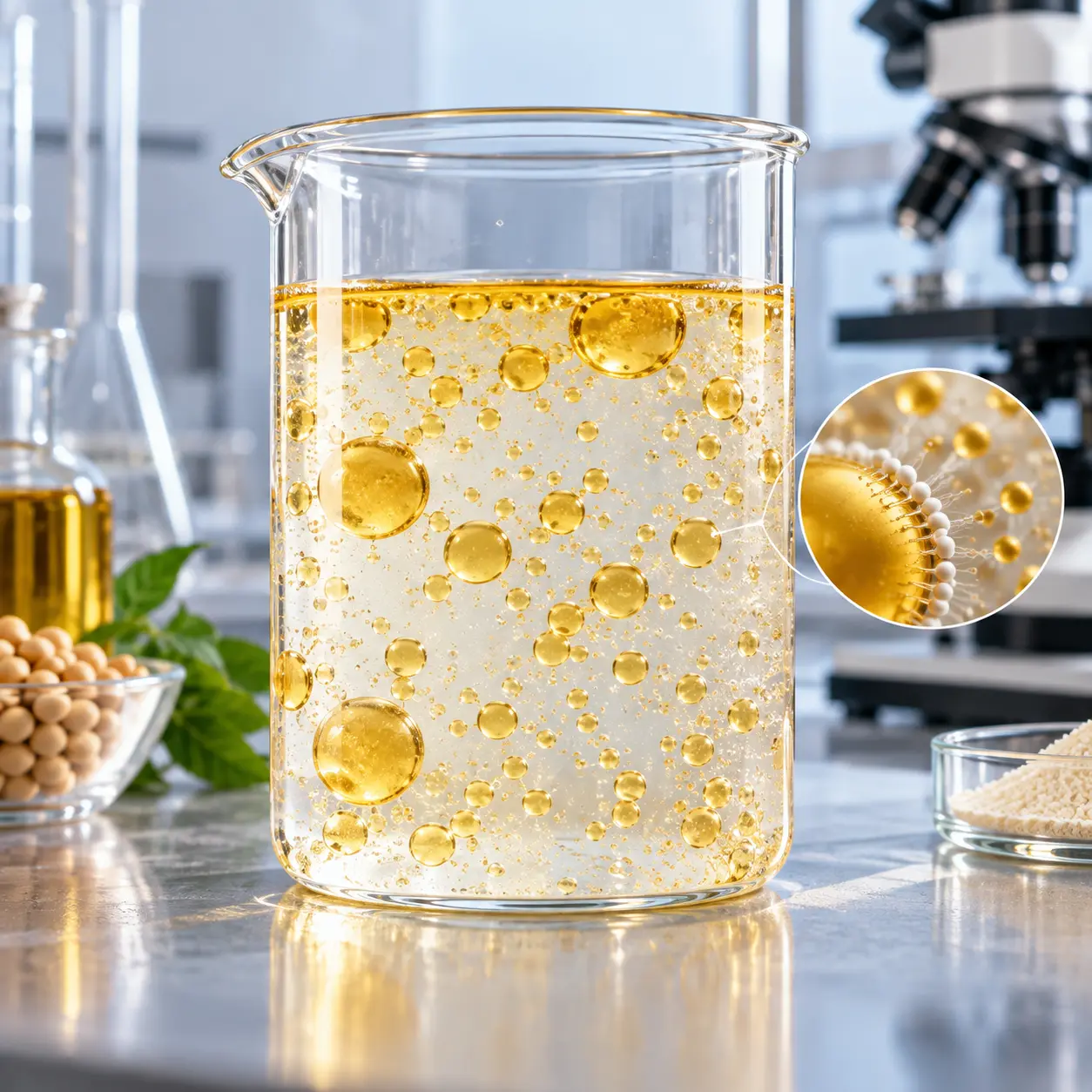
An emulsifier helps normally incompatible phases such as oil and water form and maintain a fine dispersion, while a stabilizer mainly helps a finished food keep its intended texture, viscosity, suspension or physical structure over time. Some ingredients can contribute to both functions, but formulators should select them according to the actual instability mechanism, processing conditions and finished-product target.
Emulsifier vs stabilizer is an important distinction in food formulation because these ingredient classes solve different physical problems. An emulsion can fail because oil droplets merge, while a sauce, dessert or beverage can fail because particles settle, water separates, viscosity drops or the structure changes during storage. Understanding the difference helps manufacturers choose ingredients more precisely, avoid unnecessary additive combinations and design trials around measurable performance rather than ingredient labels alone.
This guide explains how emulsifiers and stabilizers work, where their functions overlap, how lecithin fits into the picture, and which questions a food technologist should ask before selecting either ingredient. For a deeper look at interfacial behaviour, see our guide to how food emulsifiers work in food manufacturing.
What is an emulsifier in food manufacturing?
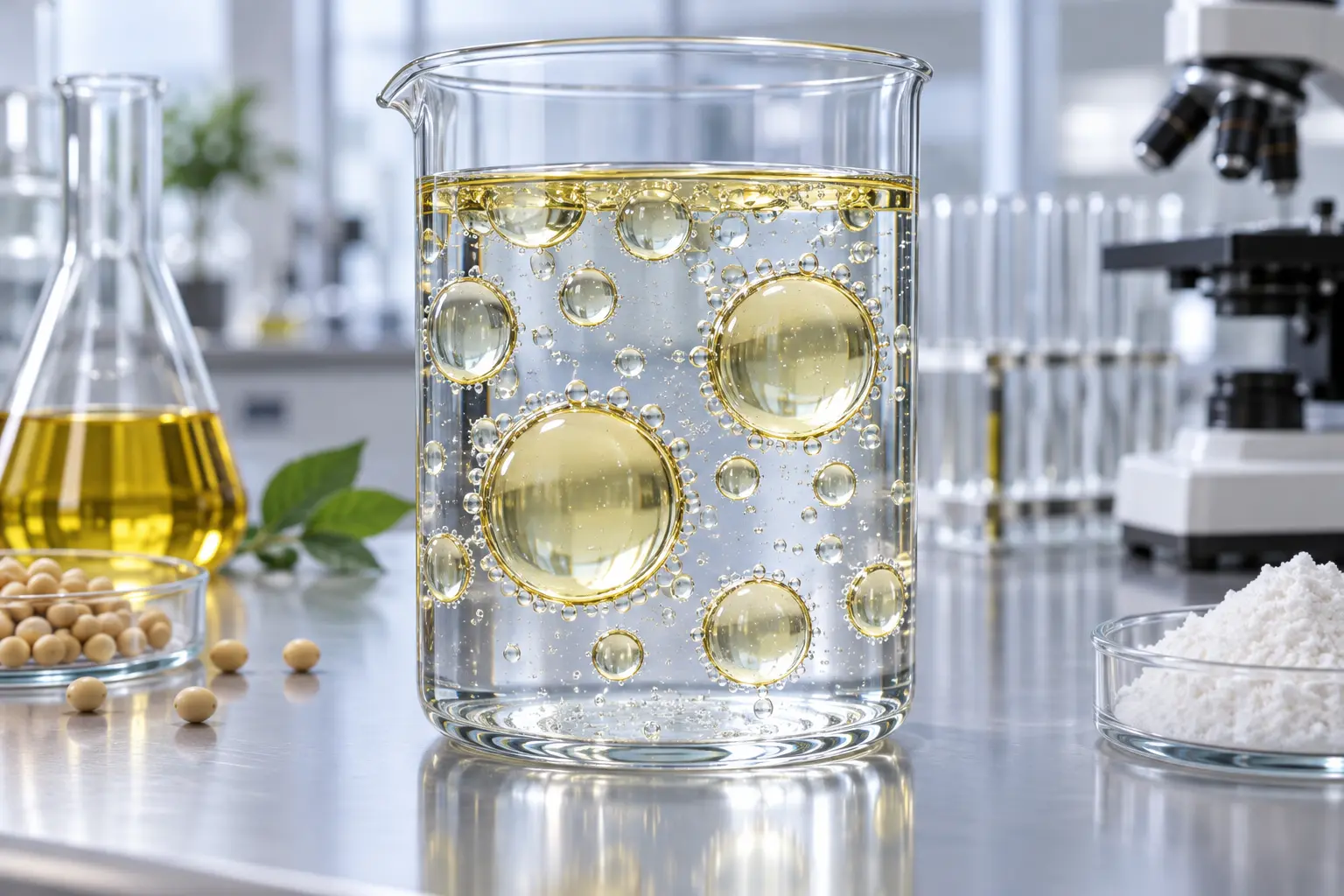
An emulsifier is an ingredient that helps two phases that do not naturally mix, most commonly oil and water, form a more uniform dispersion. At the interface between these phases, an emulsifier can reduce interfacial tension and create a protective layer around droplets. That can make droplet formation easier during mixing or homogenisation and can slow processes such as coalescence after processing.
Food emulsifiers are used in products including dressings, spreads, bakery systems, chocolate, beverages, sauces and frozen desserts. The exact function depends on the molecular structure of the emulsifier and the formulation around it. Lecithin, mono- and diglycerides, polysorbates and other permitted emulsifying systems have different affinities, processing behaviour and regulatory conditions. The FDA describes emulsifiers as ingredients that allow smooth mixing, help prevent separation and keep ingredients dispersed in suitable applications. FDA guidance on types of food ingredients provides a useful regulatory overview.
What problem does an emulsifier solve?
The central problem is interfacial instability. Oil and water tend to minimise contact with each other, so droplets can collide, merge and eventually create visible separation. An emulsifier helps build and protect the interface. However, an emulsifier does not automatically provide the bulk viscosity or gel network required to stop droplets, particles or bubbles from moving through the continuous phase.
That limitation is why an emulsified product can still need a stabilizer. A well-covered droplet can remain chemically and interfacially protected but still cream, sediment or move if the surrounding phase is too thin. The final solution therefore depends on both droplet-level and system-level behaviour.
What is a stabilizer in a food formulation?
A stabilizer is used to help a food preserve its physical structure, texture or distribution of components during processing, storage and use. Stabilizers often work in the continuous phase by modifying viscosity, water binding, gel structure or particle mobility. Common examples include pectin, xanthan gum, guar gum, carrageenan and certain starch or hydrocolloid systems, depending on the food and applicable regulations.
Stabilizers can reduce sedimentation in drinks, help keep suspended material evenly distributed, control syneresis in gels, improve body in sauces and support freeze-thaw stability in some systems. They are therefore broader texture-management tools rather than ingredients whose primary role is necessarily the oil-water interface.
Stabilization is a system property
It is useful to think of stability as a result rather than a single ingredient function. A product may be physically stable because several mechanisms work together: an emulsifier protects droplets, a hydrocolloid increases continuous-phase viscosity, proteins create a network, and the processing step produces an appropriate droplet or particle size. If one component is changed, the entire balance can shift.
Emulsifier vs stabilizer: the practical differences
| Formulation question | Emulsifier | Stabilizer |
|---|---|---|
| Primary target | Interface between incompatible phases | Overall physical structure and mobility |
| Typical role | Help create and protect dispersed droplets | Control viscosity, suspension, water movement or gel structure |
| Common problem addressed | Coalescence and phase separation in emulsions | Sedimentation, creaming, syneresis, weak body or texture drift |
| Where it acts most directly | Oil-water or other phase interface | Continuous phase or structural network |
| Typical examples | Lecithin, mono- and diglycerides, selected polysorbates | Xanthan, pectin, guar, carrageenan and other hydrocolloids |
The table highlights why the terms should not be used interchangeably. In commercial formulation, however, ingredient functionality is not always exclusive. A material may contribute to more than one technical outcome, and suppliers may describe multifunctional systems using broader language. The correct classification is less important than proving the required effect in the actual recipe.
Can one ingredient act as both emulsifier and stabilizer?
Yes, a formulation can contain ingredients that contribute to both emulsion stability and overall texture, but the mechanisms may be different. Proteins, modified starches and formulated ingredient systems can provide interfacial activity while also changing viscosity or structure. Even when one material appears multifunctional, it is still useful to separate the questions: does it create or protect the interface, and does it slow physical movement in the bulk phase?
This distinction makes troubleshooting more efficient. If oil droplets are merging, increasing viscosity alone may not solve the root cause. If droplets are already well protected but cream to the top, changing only the emulsifier may be less effective than modifying the continuous phase.
Where does lecithin fit in the comparison?
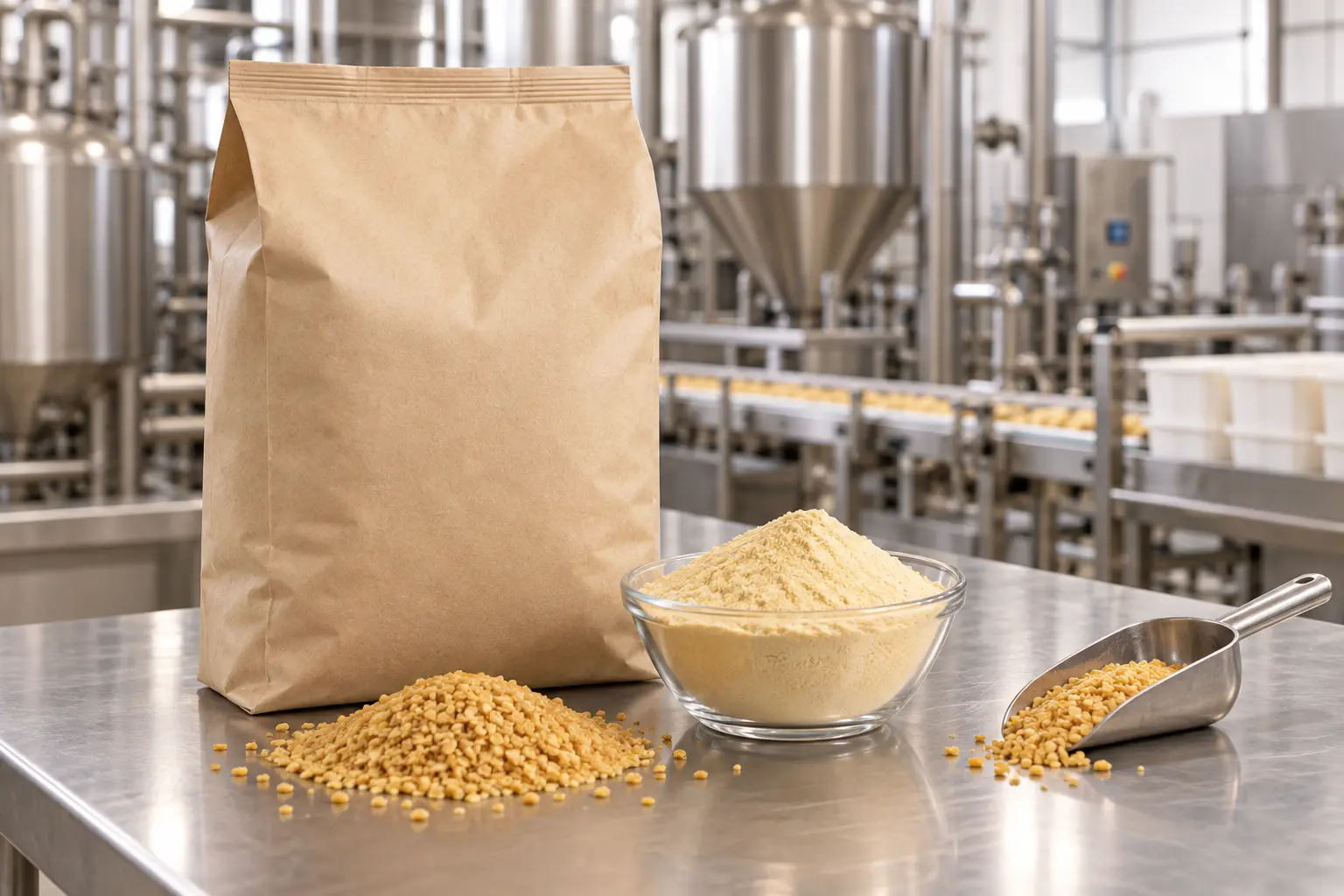
Lecithin is widely used as an emulsifying ingredient and can support dispersion, processing and texture in a range of foods. Its performance depends on source, composition, dosage, phase ratio, temperature, shear and other formulation variables. Manufacturers sourcing lecithin should therefore specify the application and quality requirements rather than treating all grades as identical. Our lecithin supply page for European manufacturers outlines common commercial grade and documentation considerations.
For comparison, some emulsifiers have a strong role in both dispersion and texture in specific foods. Our article on Polysorbate 80 as a food additive shows why ingredient selection must be linked to the intended product and processing environment rather than a generic list of functions.
How to decide whether you need an emulsifier or a stabilizer
1. Identify the visible failure mode
Start with what actually changes in the product. Is there an oil layer, large droplets, sediment, serum separation, weak body, excessive flow, ice crystal growth or a change in mouthfeel? Different failure modes point to different mechanisms. Photographing samples, tracking viscosity and measuring separation over time can make the diagnosis more objective.
2. Define the dispersed and continuous phases
Determine which phase forms droplets or particles and which phase surrounds them. The oil-to-water ratio, solids content and presence of proteins, salts, acids and sugars can alter both emulsifier performance and stabilizer hydration. This is particularly important in concentrated systems where small recipe changes can produce large rheological effects.
3. Review processing conditions
High shear, homogenisation pressure, mixing order, hydration time, heating, cooling and filling conditions all affect structure. An ingredient that performs well in a laboratory beaker can fail after scale-up if it is added at the wrong stage or exposed to unsuitable temperature or shear. Selection should therefore be accompanied by a defined process sequence.
4. Check pH, ions and thermal conditions
Hydrocolloids and interfacial ingredients can respond differently to acidity, calcium, salts and heat. A stabilizer selected for a neutral dairy system may not behave the same way in an acidic beverage. Likewise, an emulsifier may have different performance depending on oil composition and the presence of competing surface-active materials.
5. Confirm food-grade and regulatory suitability
Technical performance is only one part of ingredient selection. Manufacturers also need the correct food grade, specification, allergen information, traceability and regulatory status for the intended market and use. Our overview of what food-grade chemical status means explains why documentation and intended use must be checked together.
For the European market, EFSA evaluates the safety of food additives while authorisation and conditions of use are established within the EU regulatory framework. EFSA’s food-additives overview is a useful starting point for current regulatory context. Final compliance should always be confirmed for the exact substance, grade, food category and use level.
How emulsifiers and stabilizers work together
Many commercial foods use both classes because they address complementary mechanisms. Consider an oil-in-water sauce. An emulsifier can help create small oil droplets and protect their surfaces. A stabilizer can increase viscosity in the aqueous phase, slowing droplet movement and helping maintain body. Processing then determines droplet size distribution and hydration. The result depends on the combination rather than either ingredient alone.

This is also why simply increasing dosage is not a reliable troubleshooting strategy. Too much hydrocolloid can produce an undesirable gummy texture, while an excessive or unsuitable emulsifier can affect flavour, processing or regulatory limits. A structured trial matrix with one controlled variable at a time is usually more informative.
Common formulation mistakes to avoid
- Treating every separation problem as an emulsifier problem: settling or creaming may be driven by density difference and insufficient continuous-phase structure.
- Choosing by ingredient name alone: grade, composition and supplier specification can materially affect performance.
- Ignoring processing order: hydration, temperature and shear can determine whether a stabilizer or emulsifier develops its intended function.
- Optimising only fresh samples: stability should be evaluated across realistic storage, distribution and use conditions.
- Skipping regulatory review: permitted uses and conditions vary by market and product category.
Conclusion
The core emulsifier vs stabilizer difference is the mechanism being controlled. Emulsifiers primarily manage interfaces between phases, while stabilizers mainly help the overall food structure resist movement, separation and texture change. In many products they work together. The most reliable selection process begins with the failure mode, formulation composition, process, target texture and applicable regulatory requirements, followed by controlled pilot testing.
Frequently Asked Questions
1. Is an emulsifier the same as a stabilizer?
No. An emulsifier mainly helps incompatible phases form and maintain a dispersion, while a stabilizer usually supports bulk texture, viscosity, suspension or structure. Some ingredients can contribute to both outcomes.
2. Can a food formulation need both an emulsifier and a stabilizer?
Yes. A sauce or beverage may need an emulsifier to protect droplets and a stabilizer to control movement or viscosity in the continuous phase.
3. Is lecithin an emulsifier or a stabilizer?
Lecithin is commonly used primarily as an emulsifier, although its practical contribution to processing and texture depends on the formulation, grade and process conditions.
4. How should manufacturers choose between emulsifiers and stabilizers?
Start by identifying the actual instability mechanism, then evaluate pH, phase ratio, ingredients, process, storage conditions, required texture and regulatory status. Pilot trials should confirm the final choice.