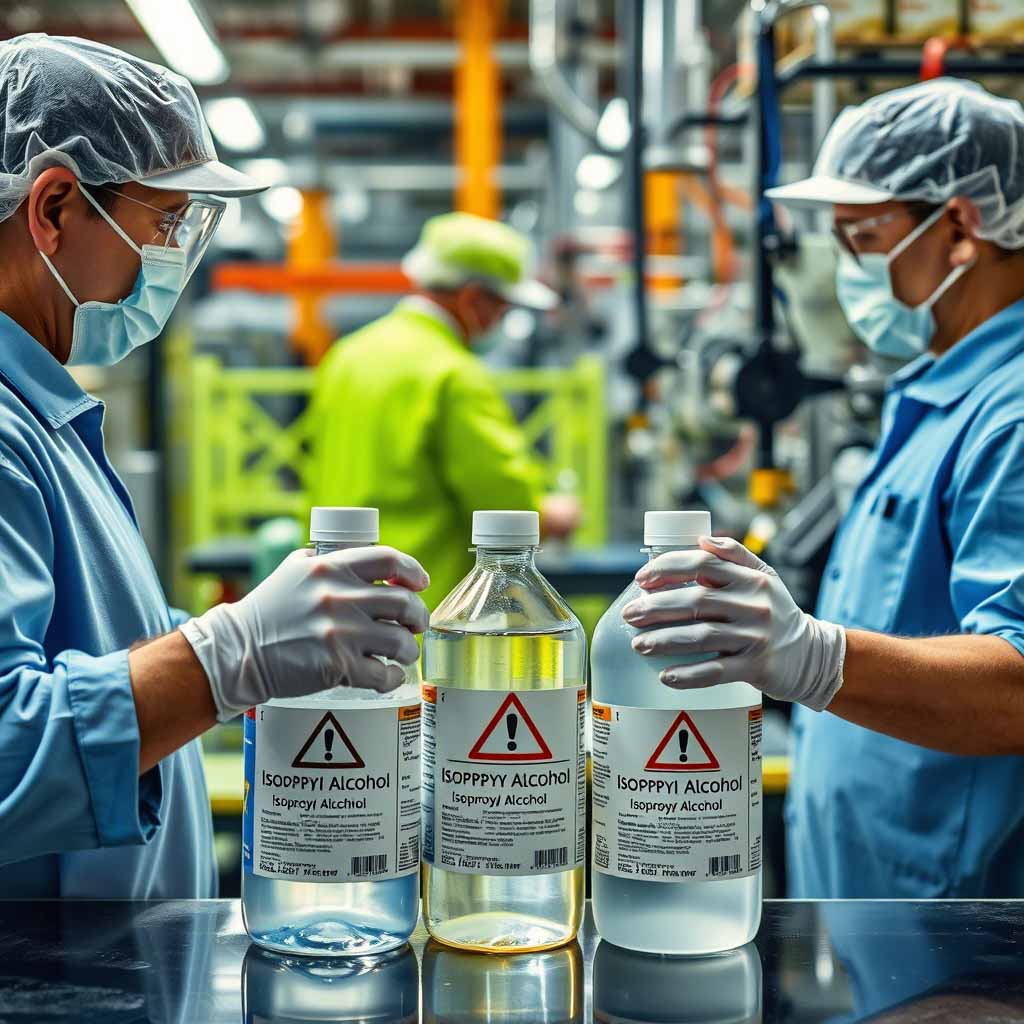
Isopropyl Alcohol and Its Uses is a versatile and widely used chemical compound with numerous applications in various industries. As a powerful solvent, it plays a significant role in cleaning, disinfecting, and manufacturing processes. In the healthcare sector, isopropyl alcohol is commonly utilized as a disinfectant to sterilize surfaces and equipment. Additionally, its use extends to personal care products, such as hand sanitizers, and in household cleaning products. This alcohol is also used in industrial applications, including in the electronics and automotive industries, for cleaning parts and equipment. The following article explores the diverse uses of isopropyl alcohol, highlighting its effectiveness and essential roles in daily life and industry.
Isopropyl alcohol (IPA), also known as rubbing alcohol, is a colorless, flammable liquid commonly used as a solvent, disinfectant, and cleaner. It is made through the hydration of propene, a byproduct of petroleum refining. With a chemical formula of C3H8O, isopropyl alcohol has a strong odor and evaporates quickly. It is widely used in both household and industrial applications, including cleaning electronic devices, sterilizing medical instruments, and in personal care products like hand sanitizers. Isopropyl alcohol is effective at killing bacteria, viruses, and fungi, making it a staple in healthcare settings and at home.
Isopropyl alcohol has a wide range of uses across different sectors, including household cleaning, healthcare, personal care, and industrial applications, due to its effective disinfecting and solvent properties.
Common Uses of Isopropyl Alcohol
Isopropyl Alcohol in Household Cleaning
Isopropyl alcohol is a powerful cleaner used in many household cleaning tasks. It is particularly effective at removing grease, grime, and sticky residues from various surfaces. Its ability to evaporate quickly makes it a convenient option for cleaning glass, mirrors, and countertops without leaving streaks. Common uses include:
Surface cleaning: It’s effective for cleaning kitchen counters, sinks, and bathroom surfaces;
Glass and mirror cleaning: Its quick evaporation makes it ideal for leaving surfaces streak-free;
Disinfecting: Kills germs and bacteria on frequently touched surfaces like doorknobs, light switches, and remote controls.
Isopropyl alcohol is also used to clean floor tiles, remove stains, and deodorize fabrics. It is a non-toxic, versatile solution that is a staple in many households.
Isopropyl Alcohol in Household Cleaning
Using Isopropyl Alcohol for Disinfecting and Sterilization
One of the most common uses of isopropyl alcohol is as a disinfectant. It is effective in killing a wide range of bacteria, viruses, and fungi, making it an essential part of personal hygiene and healthcare.
Surface Disinfection: Isopropyl alcohol can disinfect countertops, kitchen appliances, and frequently touched items;
Medical Sterilization: It’s commonly used to clean medical tools and equipment, such as thermometers and surgical instruments;
Skin Sterilization: Isopropyl alcohol is also used for sterilizing skin before injections or minor surgeries.
For effective disinfection, the alcohol should be applied for at least 30 seconds to ensure the removal of germs.
Isopropyl Alcohol in Personal Care Products
In personal care, isopropyl alcohol is used in a variety of products due to its antiseptic and solvent properties. It is widely found in hand sanitizers, facial cleansers, and hair care products. Here are some common applications:
Hand sanitizers: Isopropyl alcohol is a key ingredient in hand sanitizers, effectively killing germs when soap and water aren’t available;
Facial cleansers: It helps remove excess oils and impurities from the skin;
Shaving creams: It acts as a solvent to dissolve oils and improve texture;
Aftershaves: Due to its antiseptic qualities, it’s often used to prevent infections after shaving.
These properties make isopropyl alcohol a versatile ingredient in maintaining cleanliness and personal hygiene.
Industrial Applications of Isopropyl Alcohol
Isopropyl alcohol has many applications in various industries due to its ability to dissolve oils, fats, and other non-polar substances. It is commonly used for:
Cleaning machinery: Removes grease, oils, and residues from industrial machines;
Paint thinner: Used in the preparation and thinning of paints and coatings;
Chemical production: Acts as a solvent in many chemical manufacturing processes;
Surface preparation: Prepares surfaces before coatings or adhesives are applied.
The ability of isopropyl alcohol to clean and degrease materials without damaging them makes it essential in industrial settings.
Isopropyl Alcohol for Electronics Cleaning
Isopropyl alcohol is often used to clean delicate electronic devices because it evaporates quickly, leaving no residue behind. It is highly effective for:
Cleaning computer parts: Including keyboards, screens, and circuit boards;
Wiping down phones and tablets: It safely removes fingerprints, oils, and dirt without damaging the device;
Disinfecting: Isopropyl alcohol kills bacteria and viruses on smartphones, laptops, and other gadgets.
Because it doesn’t leave a residue or harm sensitive components, it’s a preferred cleaner for electronics in both home and industrial environments.
Isopropyl Alcohol as a Solvent in Manufacturing
In manufacturing, isopropyl alcohol is used as a solvent to dissolve a variety of substances. It is used in processes such as:
Dissolving resins and oils: In the production of paints, adhesives, and coatings;
Cleaning and degreasing: It removes oils, grease, and impurities from components in manufacturing;
Producing pharmaceuticals: It’s used to extract certain compounds and as a solvent in the formulation of drugs.
As a solvent, isopropyl alcohol’s versatility and efficiency make it an essential part of many manufacturing processes.
Isopropyl Alcohol in Automotive Maintenance
In the automotive industry, isopropyl alcohol is used for various cleaning and maintenance tasks:
Cleaning engine parts: It effectively removes oil, grease, and dirt from engine components;
Fuel system cleaning: Helps in cleaning fuel injectors and carburetors;
Windshield and window cleaning: Leaves windows sparkling and streak-free;
Removing adhesives: Isopropyl alcohol is used to clean off adhesive residue from stickers or decals.
Its fast-drying nature and ability to break down grease make it an indispensable tool for automotive professionals.
Isopropyl Alcohol in the Pharmaceutical Industry
The pharmaceutical industry relies heavily on isopropyl alcohol for various applications due to its ability to act as both a solvent and an antiseptic:
Sterilizing equipment: Used to disinfect tools and machines to prevent contamination;
Extracting compounds: Isopropyl alcohol is used to extract medicinal compounds from plants or other substances;
Topical antiseptic: Applied to disinfect skin before procedures or to treat minor cuts.
Its broad-spectrum disinfecting properties and compatibility with other substances make it a critical component in pharmaceutical production and healthcare.
Isopropyl Alcohol for Deicing and Cooling Applications
Isopropyl alcohol is also effective in deicing and cooling applications:
Deicing windshields: It can be used to prevent ice buildup on car windows and mirrors;
Cooling systems: In some industrial cooling systems, it acts as a solvent to reduce friction and dissipate heat;
Prevention of frost: Isopropyl alcohol is used in various systems to prevent frost formation in machinery or equipment.
Its low freezing point and rapid evaporation make it an excellent choice for these applications.
Uses of Isopropyl Alcohol in Laboratories
In laboratories, isopropyl alcohol is a crucial tool for maintaining a clean and sterile environment:
Cleaning lab equipment: It is used to clean glassware, pipettes, and other lab tools;
Disinfecting surfaces: Helps sanitize countertops and equipment to prevent contamination;
Solvent in chemical reactions: It’s used as a solvent in many laboratory procedures and reactions.
Its ability to clean without leaving a residue and its low toxicity make it ideal for use in scientific research and laboratories.
Safety Considerations and Precautions When Using Isopropyl Alcohol
Isopropyl alcohol is a highly effective cleaning and disinfecting agent, but it must be used with caution due to its flammability and potential health risks. Here are some important safety considerations when handling isopropyl alcohol:
Flammability: Isopropyl alcohol is highly flammable. Always use it in a well-ventilated area, away from open flames, sparks, or heat sources. Store it in a cool, dry place and keep it away from ignition sources;
Proper Ventilation: Ensure the area is well-ventilated when using isopropyl alcohol, especially in confined spaces. Inhaling vapors can lead to headaches, dizziness, and respiratory irritation;
Protective Gear: While isopropyl alcohol is generally safe for external use, prolonged contact with the skin can cause dryness and irritation. It’s recommended to wear gloves and protective eyewear when handling large quantities;
Toxicity: Isopropyl alcohol should never be ingested. Swallowing even small amounts can lead to poisoning, causing symptoms such as nausea, vomiting, and dizziness. Seek medical attention immediately if ingestion occurs;
Storage: Always store isopropyl alcohol in its original container, securely closed, and out of the reach of children and pets.
By following these safety guidelines, isopropyl alcohol can be used effectively and safely in a variety of applications.
Alternatives to Isopropyl Alcohol
While isopropyl alcohol is a widely used disinfectant and cleaner, there are several alternatives that can also be effective, depending on the specific application. One common substitute is ethanol, which has similar antiseptic properties and is often used in sanitizers and surface cleaners. Hydrogen peroxide is another option, particularly for disinfection, as it effectively kills bacteria, viruses, and fungi. For general cleaning, vinegar mixed with water can be used as a natural, non-toxic alternative. Additionally, chlorine bleach is a powerful disinfectant, though it requires more caution due to its harshness and potential toxicity. These alternatives offer different benefits and may be more suitable for specific uses, but each has its own set of safety considerations.
Conclusion
In conclusion, isopropyl alcohol is a versatile and essential compound widely used in various sectors, including household cleaning, healthcare, industrial applications, and electronics maintenance. Its powerful disinfectant properties, fast evaporation rate, and solvent capabilities make it a go-to choice for many tasks. However, due to its flammability and potential health risks, it is crucial to follow safety precautions when handling it. With appropriate use and awareness, isopropyl alcohol continues to be an effective solution for cleaning, sterilization, and more, proving its value in everyday life and professional settings.
FAQs
1. Is isopropyl alcohol safe to use on skin?
Yes, isopropyl alcohol is safe for short-term use on skin, but it can cause dryness and irritation with prolonged exposure. It’s commonly used for sanitizing hands or disinfecting minor cuts, but it’s important to use it sparingly and follow up with moisturizer to avoid skin damage.
2. How flammable is isopropyl alcohol?
Isopropyl alcohol is highly flammable and should be handled with care. It has a flash point of about 12°C (53.6°F). Always store and use it away from open flames, heat sources, and sparks, and ensure the area is well-ventilated.
3. Can isopropyl alcohol be used to clean electronics?
Yes, isopropyl alcohol is often used to clean electronics because it evaporates quickly and leaves no residue. It’s ideal for cleaning items like smartphones, computers, and other electronic devices. However, it’s crucial to use it carefully to avoid damaging sensitive components.
4. What are the alternatives to isopropyl alcohol?
Alternatives to isopropyl alcohol include ethanol, hydrogen peroxide, vinegar, and chlorine bleach. Each has specific uses and advantages, such as ethanol for sanitization, hydrogen peroxide for disinfecting, and vinegar for general cleaning. Always choose the right alternative based on the task and follow safety instructions.